What is Heat?
Energy
On the backdrop of Lavoisier's mistaken position that heat was an invisible fluid ether called "caloric," many scientists in the early 1800s were trying to figure out and verify the actual inner workings of heat. Normally, the relationship between science and technology is that a new scientific discovery emerges, and in time, it is harnessed to create technologies that are based on it. For this reason, the very word technology is a synonym for applied science. That term, "applied science," should make it clear that the relationship is causal and which of the two components, the science or the application of it in creating new technology - comes first. While that is true the vast, vast majority of times, in the case of steam engines and the industrial revolution they
spawned, the cart came before the horse. This is quite possibly because steam was such a simple resource to adapt in creating the rudimentary steam engines of the day that industry led scientific innovation.
Whatever the case, this was the scene in the early 1800s and scientists playing catch-up soon started trying to improve the efficiency of steam engines to maximize the benefits of the new technology. To do so, they would have to discover and harness the laws of thermodynamics. However, this task was made more difficult by their erroneous beliefs in caloric theory. The history of thermodynamics was shaped by many different scientists, instead of being masterminded, by just a handful - or one, or two as is often the case. Thus, since many contributors had a hand in crafting the final laws of thermodynamics, you can expect that no single scientist had a clear understanding of the thermodynamic landscape as a whole. Not until the genius of Rudolf Clausius, of whom
much more about later.
For now, we will continue our journey into the history of the fundamental discoveries of science by coming to understand what key components constitute the science of thermodynamics and briefly delving into how each was discovered and established. As with most things after Newton's turn on the scientific stage of accomplishments, the story starts with his point of view on a contested subject.
Understanding Energy, Heat, Work & the Four Laws of Thermodynamics
Thermodynamics, is the area of physics which rules every other scientific discipline, whether chemistry, biology, metallurgy, structural engineering, rocket science or any other you would care to name. Thermo means heat, and dynamics refers to movement. A critical point to understand is that unless there is a difference in temperature, heat cannot be used to perform work, as it will not transfer from one object to another. For heat to transfer, there must be a temperature gradient. That is, one object or area must be hotter than another, for heat to be converted into work! Thus, it was this crucial understanding of what heat was, and how and why it transferred from one object to another, that would prove pivotal,
to understanding the universe and defining the hard boundaries of all other scientific disciplines!
Thermodynamics is described by Hank Green of CrashCourse as: "the physics of heat, temperature, energy and work." Incredibly, at the beginning of the 19th century, that is, at the beginning of the 1800s, scientists misunderstood all four of those fundamental concepts! They didn't understand heat, as they believed in caloric. They hadn't defined what the entity we call temperature was. They also had no concept of the terms energy and work, which are so familiar to us, we take it for granted that mankind has always recognized their existence and more importantly, their significance. In fact the term "energy," was first used in its technical scientific meaning
only in a 1807 lecture given by Thomas Young, who had earned fame after his groundbreaking double slit experiment that proved that light acts like a wave. And its first recorded use in the English language was not long before, in 1783, when it was used to communicate a sense of "dynamic energy" (Mirriam-Webster online dictionary). The truth about how recently we figured everyting out is somewhat shocking. Up until roughly 200 years ago, no one had managed to work out the scientific breakthroughs that led to the discovery of these foundational scientific truths and their universal application on all physical systems. To get to the bottom of this matter we will go through how all four of the principles of a thermodynamic system work, and the brief history of how they
were each discovered. Incidentally, thermodynamics has four key variables: temperature; energy; heat; and work. And four laws that define how those variables work, classified as the: zeroth law; the first law; the second law; and the third law of thermodynamics. I will explain later why the naming convention is so unusual. We start with Energy, and the journey to its discovery and experimental verification. We will do the same for each of the other three main variables in thermodynamics and end of with an introduction to yet another important aspect of all such systems: the surprising existence of - Entropy.
Newton VS Leibniz
Newton, who, of course had come up with the laws of motion, had tried to quantify the force with which an object with mass would impact any other object it would come across. The best he came up with was that the impact that such an object would have on other objects would be the product of its mass multiplied by its velocity. Let's describe that as: f = M x V. In this, he and noted French mathematician Rene Descartes agreed. However, consensus is not verification. In another camp was German polymath and renowned genius Gottfried Wilhelm Leibniz. He believed that the force of impact could be calculated by mass multiplied by the velocity squared! That is, f = M x V x V, or simply f = MV2.
To get the flavour of the difference between the two formulas, we need only consider the following scenario. If you dropped a ball from a certain height, into say some soft clay, it would sink to a certain depth. But what would happen if you increased its height above the clay by a factor of two? Newton's formula says the result would be the ball traveling twice as far into the soft clay. Leibniz disagreed, saying it would travel four times as far! Since 2 (from twice the distance) multiplied by 2 (the effect of squaring is to multiply something by itself twice) is four. Who was right?
Into the picture came someone who would meld the correct conclusions from both men and come up with a refined understanding of such a force. Incidentally, in Newton's formulation of this equation, people had observed that whenever two objects with equal mass and velocity collided, they were bound to stick to each other, so Newton's formula came to be called the "dead force." While Leibniz' formula came to be called the "living force." With that we delve deeper into which of the two claimed forces was the correct understanding of nature with our next great scientist - Emilie du Chatelet.
Emilie du Chatelet
Understanding & Refining the Living Force
Emilie du Chatelet (17 December 1706 - 10 September 1749), was truly a bright spark. Born of a wealthy family and trained as a mathematician, she had the gift to think outside the box and bring disparate ideas together. Nowhere would that distinct ability be needed more than in helping to resolve the raging debate of her day: what was the nature of heat? A mind as sharp as du Chatelet's was a critical contributer to the eventual resolution of the task at hand, because beneath this seemingly simple challenge lay a hornet's nest of complexity. As Kathy Joseph notes Du Chatelet lived in times of fervernt nationalism, where many in society backed a theory - not on its merits - but, merely because the person who proposed it was from their own nation. Assessing scientific
discourse on the veracity of its facts, or the logic on which such theories were based came second to nationalistic pride. Emilie du Chatelet was different. A free thinker who valued ideas on their merit and for their explanatory power, she relied on experimental results to establish, which of the many contemporaneous philosophies would lead to true scientific knowledge. But she wasn't just a commentator on scientific discourse, she was a most notable contributor to the growing catalogue of scientific knowledge.
The Problem with Scientists Depending on Ethers
We come upon her at a critical juncture in the history of science. Much had been learned about the true nature of reality, but much more was yet to be gleaned, and it would require minds with a perchant for sticking to the data to uncover what yet lay beneath the shroud of ignorance. Her contributions come as we have moved from the four ancient elements of the early Greek thinkers, past the ether of terra pingus, which in turn, morphed into the ether of phlogiston. The point about all those ethers, is that they were trying to explain fire or combustion, among other chemical processes like respiration and oxidation (rust). With Lavoisier's insights into the true nature of chemical compounds and elements, humanity had gotten a foothold on the beginnings
of the periodic table and the science of chemistry. We now faced different challenges! Mankind had to understand what the true nature of the phenomenon called "heat" was. And how it worked? In tackling this problem, Lavoisier had dissapointly regressed back to invoking yet another ether! Do we never learn? This time the ether was in the guise of Caloric - and as with all ethers, it was: invisible, colourless, odourless, and hard to detect. Ethers are also usually described as self-repellent. This property is usually used to describe some dynamic of how they are supposed to work. In this instance, the caloric ether was described as a fluid (hence its supposed ability to flow from one substance to another, or from region of a body or entity
to another). Since it itself was supposed to be heat, as it flowed it was said to carry heat in and out of different substances by "flowing" from hotter to colder bodies. As you are surely taking note: sometimes ethers are described as "fluids," as is the case with caloric. Other times they are described as invisible "crystals," as was the case with Aristotle's heavenly spheres; and at yet other times they are described as a type of "air," as was the case with Becher, Stahl and Priestly and their beloved phlogiston. A pattern that I am sure you have noticed.
The standard description of ethers as being colourless, odourless, hard to detect etc. make them vedry appealing to philosophers when they formulate theories on subjects for which no data has yet been collected. Since their ideas are meant only to match how things appear - and not how they actually function, all that is needed is a blank - and importanly - hard to detect canvass onto which the suddenly sage philosopher can unleash his full imagination about the underpinnings of how this or that phenomena in nature actually works. And, "voila!" An instant and detailed understanding of nature springs into existence! This is the sci-fi fantasy of ethers.
By definition - because they are so cleverly constructed - it is near impossible to prove that such ethers are false without data. Only with empirical data and the advent of the right working model that then makes sense of the experimental data and verified observations are such ethers ever debunked. Ethers are fake science. Their role is to make the general public think they understand how this or that phenomenon in nature works. They accomplish this without data or empirical evidence because they only have to map to how things LOOK, not how they actually function. They are thus, initially very convincing, and easily become conventional wisdom. Sometimes, as in the case of Aristotle's ether-based theories, for well over a thousand years
of human history! You will note, also, that ethers are only invoked at the beginning of an enquiry into an unknown, or currently misunderstood part of nature. They are only ever used before exprimental evidence is collected and catalogued - never after. They are never invoked after how something works has been been proven through the scientific method. In other words, no scientific discovery has ever been published with experimental evidence AND an ether-based explanation. When Lavoisier invoked an ether after he already had used experimental evidence to prove the existence of oxygen, the ether was not invoked to explain oxygen - but heat! A yet, misunderstood phenomenon of nature.
Here is Hank Green of YouTube's Crash Course channel explaining the invocation of ethers in the 1800s. Pay close attention to his words, and take note of what conditions such ethers
were invoked under:
[Lavoisier] used the caloric theory, which explained heat transfer as an ether, or colourless fluid, that migrated from a body at a higher temperature to one at a lower temperature. This made sense to Lavoisier when he was upending chemistry. But it was wrong!
Infact, ether was the explanation for many unkown phenomenon in the eighteenth century. And there were a lot of ether theories
Hank Green: Thermodynamics #26
Understanding Why Scientists Resort to Ethers - & Why they Never Work
"For many unknown phenomenon," Green said. That is, while nothing much is known about a particular subject. That is the historical scientific record of when ethers are used! It requires pause to realize the gravity of what Green just explained. First we realize how ethers are always used: as a broad brush to try and explain something before any empirical evidence opens up the possibility of a fact based understanding - and explanation. Second: this practice of using an invisible broad brush to gloss over the absence of facts and actual observational data is utilized again and again to explain all manner of misunderstood phenomenon. It doesn't matter what field the unknown phenomenon is in, ethers are
routinely applied to try and explain different mysteries of nature: from the cosmos in space, to how atoms function in chemistry. It's simply astounding. As Green says: "... ether was the explanation for many unknown phenomenon in the eighteenth century. And there were a lot of ether theories." The point is clear. Ethers are routinely used as a universal bandaid for trying to explain the unknown - as long as there is no data. It's as if errant scientists ask themselves, "Are there any new phenomena to be studied? Well ... instead of wasting our time and effort trying to figure them out, why don't we just use our imagination and an ether to explain them?" That alarming attitude is exactly what scientists have embraced time and time again throughout the history of
science. Also, ethers are readily adopted by the general public because they seemingly confirm their own everyday assumptions about a misunderstood phenomenon, and so gain quick acceptance. Consider, which was easier for the common man to accept in ancient times: the then preposterous claim that the earth moved - and revolved around the sun while spinning on its own axis every 24 hours; or the seemingly obvious claim that the sun revolves around the earth daily? "Duh. That's why we call it "sun-rise" and "sun-set," and not earthrise and earthset...." Lol. Just one thing: the truth was the exact opposite of expectations based on casual, data-less observations predicted! In the
end, ethers never result in useful science.
Emilie du Chatelet was no etherist. It was quite obvious to her, having studied the works of Newton in great depth, including his most profound volume Principia, that he was right about the laws of motion. But being right often doesn't mean always right. Having an open mind she questioned who was right between Newton and Leibniz as to the equation of the force with which an object would impact another. She ran her own tests and discovered that Leibniz was correct. The living force was the more accurate formula for understanding the dynamics of objects.
But there is no force in current physics that is known as the living force. So, we now trace how science developed from the living force to our common term - Energy.
From Caloric to the Founding of the Laws of Thermodynamics
It should not surprise you that the reason Emilie du Chatelet takes a starring role at this point in our story is because, where the brilliant Lavoisier failed - she excelled. Again, the factor that was holding progress back was using the wrong model. Using ethers. We have set the stage as to Newton's dead force formulation and the living force as proposed - and experimentally proven - by Leibniz. Emelie, as ever reliant on experimental proof and observational evidence, agreed with Leibniz and said the living force calculated for colliding objects (so named because the objects mostly continued in motion after impact) was indeed determined by the equation f = M x V2. We are now at the point of having established
a formula for a quantity that - in our story - we currently call the "living force." Keep in mind that as we journey through the many and varied independent discoveries of thermodynamics, we are going to come across what the inventors initially called these properties or entities, and yet later come across what the scientists who refined and added to their work called them, and only lastly arrive at the familiar terms we use to define said properties and entities today. A second caution is necessary to appreciate that nature has many interacting dynamics. Sometimes many things that are thought of as being different prove only to be different manifestations of the same deeper reality, as is the case with the electromagnetic spectrum (light). Other times, what we might
initially think of as one indivisible thing proves to be made up of multiple smaller components, as was the case with atoms. Let us continue.
To show how science builds on successive victories of human understanding and as a testament to du Chatelet's impressive genius I provide the following anecdote about how she used the recently verified equation of the living force in determining a key variable about the nature of light. Du Chatelet, went against the grain of the conventional wisdom of the time and opposed her contemporaries, by insisting that light cannot have mass. A then, very heterodox idea. Her reasoning was clear, flawless, precise and most importantly - correct. If light were not massless, she argued, then according to the formula for the living force, light would thus having an immense resulting force due to its tremendous speed - and the fact that it was squared. In such a case, she wrote: "a
single instant of light would destroy all the universe." The reasoning could not be faulted. And light, as we now know, is indeed massless. This conclusion was written in a publication that outlined her fact based theory of how light and fire worked. And it gives us insight into how she got involved in the discoveries which led to how heat works. A hundred years before others realised it, du Chatelet concluded the following about the nature of fire (heat) and motion:
Thus, far from motion being the cause of fire, as some philosophers thought, fire is on the contrary the cause of the internal motion of the particles of all bodies
"
Emilie du Chatelet
This was more than a 100 years before the brilliant Lord Kelvin would arrive at the same conclusion in 1848! Her reasoning was a clear rebuttal of phlogiston theory which imagined combustion to be the transfer of phlogiston out of a substance. It was this level of insightful thought that she brought to the debate about the nature of heat. Although she died in 1747, her scientific thinking helped shape the 1800s and the paradigm shift necessary to move scientists from thinking of caloric as heat, to correctly formulating the laws of thermodynamics as the proper model for heat and its effects. Du Chatelet's core genius lay as Kathy Joseph puts it, in her taking: "What seemed like disparate and opposing ideas, and elegantly mesh[ing] them together."
Thomas Young
From Living Force to Energy
As we mentioned earlier, the term energy has not been in use in science for as long as you might think. It was first used by Thomas Young in one of a series of lectures that he was giving about the living force. He found it much more expressive of he idea of a living force, because it was defined as "dynamic energy." Thus, through Emilie du Chatelet, mankind went from Newton's incomplete idea of the dead force, to the more correct formulation proposed by Leibniz of a living force. This living force, was synthesized by du Chatelet into the rest of Newton's ideas and calculations about how the universe actually worked. Sixty years after her death Thomas Young renames the living force: energy - the name it still
has today. But there would be more refinements, for the concept of energy was only just getting off the ground. Much more was needed to be discovered before mankind would get an accurate picture of how the universe works. For one thing, we needed to empirically establish the relationship between energy and work. We needed engineering insights.
Understanding WORK: A Crirical Refinement to the Energy
About a hundred years after her death, we are now nearing the mid-1800s and the great debate about the nature of the living force - or energy - is still unsettled. These things sometimes take time. After her death du Chatelet's scientific reasons were captured in the French encyclopedia by Denis Diderot one of its co-authors. Even with that foundation, not much progress was made in further defining energy. That was until a former military engineer left the armed forces to become a full time scientist. His former employment gave him a practical edge in engineering that most scientists do not possess. His name was Gasbard-Gustave de Coriolis.
Gasbard-Gustave de Coriolis
Coriolis (21 May 1792 - 19 September 1843) increased human knowledge in various ways. It was Coriolis, who in his experiments with forces, masses and movement refined the world's understanding about the nature of the "living force." His initial foray into this field was a paper he published in 1829 about the results of some of his experiments. In it he created a new scientific term called "Work." He stated, "The definition of work is ... the product of the space tranversed multiplied by a force directed perpendicularly to this space." But that wasn't the groundbreaking part. Quoting Kathy Joseph, he further found, "... that if an object was pushed on a flat surface, then [that] object would have a change in one half the mass times speed squared." Through these
experiments Coriolis had managed to refine the equation for the living force into the form we still use today! The equation for the living force is thus f = 1/2mv2. But Coriolis' penchant for experimentation had gone even further. He played around with his machinery and found that if a machine did work by pushing something uphill, then the calculation for the amount of living force necessary was different. Again Joseph expresses it clearly: "The work minus the weight times the height equaled the change in living force." Let us write that out so we can clearly see what is happening. We will then isolate the work variable on the left hand side of the equation so we can see how the other variables result in the
amount of work done. Our aim is to understand what the equation means. Though he established this formula using calculus, I will write it out below in simple mathematical terms for clarity and ease of understanding. It is very straightforward:
W - ph = 1/2 MV2 - 1/2 MV02
Where W is work, p is weight (we can't use 'w' as a symbol because we have already used 'W' for work), h is height, M is mass, V is the initial velocity, and V0 is the final velocity. To really understand what this equation is telling us, we must isolate the work variable, resulting in:
W = 1/2 MV2 - 1/2 MV02 + ph
We will remember from grade school that in an equation whenever we take a term across the equal sign we must change its sign. Thus, - ph turns into + ph, again where ph means the weight times the height of the object in question. In this form what the equation is telling us becomes very clear. When a machine pushes an object up a hill the work needed to do so requires TWO TYPES of forces - not one!
It requires the difference in the living force, from the initial state to the final state plus another kind of force, which due to its definition (weight times height), you might recognize as gravitational potential energy. That's what we call it today. In a paper published in the 1852 William Thomson (Lord Kelvin to you and I), wrote about dividing the stores of mechanical energy: "... Into two classes - statical and dynamical." He went on to explain the difference between the two classes: "A quantity of weights at a height, ready to descend and do work when wanted, an electrified body, a quantity of fuel, contain stores of mechanical energy of the statical kind." On the other hand, he continued,
"Masses of matter in motion, a volume of space through which undulations of light or radiant heat are passing, a body having thermal motions among its particles ... contain stores of mechanical energy of the dynamical kind." Of course, you still don't recognize those terms, which tells us that further refinements were soon to come along. As sure as day follows night, in 1853 William Rankin renamed these types of energy potential and actual. We are getting warmer. It would take one more adjustment to get the two terms we use today. Wresting control of the coining of these terms back, in 1855 Thomson then accepted the term potential energy, but renamed actual into the term familiar to all of us today - kinetic. Thus, by 1855 makind had managed to go from the "living force"
of more than a century earlier to first energy, and then more accurately kinetic energy. We had also managed, through Coriolis, to understand the concept of work, and that work involved all the types of energies that could be called upon in any one situation. This necessitated the naming of work that invovled gravitational effects, and thus was born the term "potential energy." Into these two categories fall all the types of energy known to physics. Lord Kelvin listed some of them. Let me give a more complete catalogue:
Kinetic Energy
-
Mechanical
-
Thermal
-
Electrical
-
Radiant and
-
Sound
Potential Energy
-
Nuclear
-
Gravitational
-
Elastic and
-
Chemical
All energies are either active or stored. Kinetic or potential. Later on, a great scientist by the name of Hermann von Helmholtz will detail some of the other forms of energy for us.
Into our expanding knowledge of the foundations of thermodynamics we must now factor in heat. Just how exactly does heat relate to the science of thermodynamics?
Heat
Nicolas Sadi Carnot
The inquisitive nature of Sadi Carnot's (1 June 1796 - 24 August 1832) intelligence led him to try and come up with the most efficient heat engine imaginable. This endeavour he regarded as of the highest priority, as he thought it would prove critical in allowing France to become dominant in world affairs, remarking: "The study of engines is of the greatest interest, as their importance is enormous, and they seem destined to produce a great revolution in the civilized world." He thus pursued his quest, as a form of patriotism. It became clear to him that every heat engine had three components in common: a heat source (analogous to fuel), a heat sink (a second heat reservoir at a lower temperature), and a piston (the part doing the work).
The heat sink is critical to the working of the engine because it is its lower temperature that ensures heat transfer. Only when heat transfers from the hotter part of the engine to the cooler part of the engine, can some of it be used by the piston to do work. Let me repeat that because it is that important. If there is no difference in temperature between the two heat reservoirs, then heat CANNOT transfer and no work can be done. In fact, the greater the difference in heat between the hot and cold reservoirs in a heat engine, the greater its its efficiency. The greater the amount of work it can accomplish. The cold sink which allows for waste heat to be released into the surrounding environment is a prerequisite for heat
transfer, not a product of it. In all this Carnot was correct.
However, as his ideas on heat were wholly based on caloric theory, he carried some misconceptions. For instance, he used the term "flow." This was meant in exactly the same way we mean it when we say a river "flows." This misconception was because he thought heat was a literal 'fluid,' and of course, fluids flow. Even today most scientists still refer to heat "flowing" as a carry-over from the phlogiston and caloric theories. The other carry over is to the reference of "burning calories." Of course, the correct description of the dynamics of heat is to say it is "transferred," from hotter to cooler objects. Subsequently, as a strong believer in caloric theory, Carnot assumed that heat could neither be created nor destroyed, only made to flow spontaneously from a hotter region/object to a colder one. He mistakenly, believed that it was this flow of heat that performed work, and not its generation or consumption. This was the only
logical conclusion for believers of caloric theory, for if heat was a substance, then according to the law of the conservation of mass, it could neither be created nor destroyed. Resulting in the only way it could could generate work being it flowing from one area of an engine to another. He stated:
The production of motive power is then due in steam-engines not to an actual consumption of caloric, but to its transportation from a warm body to a cold body
Sadi Carnot
Carnot had worked diligently to formulate his ideas on ideal engines. He had established that two heat reservoirs are necessary to do work. In the meantime, convinced that caloric (heat) was indeed, a material substance, Carnot sought to confirm whether or not its dynamics were governed by the law of the conservation of mass. Knowing the answer to that would prove final in settling the matter, for we now know, and in the early 1800s they were quickly learning, that such laws dictate how all material substances behave. He published his initial thoughts on the subject in 1824. Being the stellar scientist that he was, his thought process and findings were incredibly close to the truth, with the exception of ideas he inherited from the caloric theory. Yet, his careful, scholarly nature
eventually guided him to the right conclusion - despite his key initial misguided assumption. This was to his great credit as many scientists are too proud to adapt their initial hypothesis, in the face of contrary evidence. We see that today, within the wholly science fantasy based string theory community. As for Carnot, he formulated his final understanding in a second manuscript, that would only be published 58 years after his death, writing:
Heat is simply motive power, or rather motion which has changed form. It is a movement among the particles of bodies. Wherever there is destruction of motive power
there is, at the same time, production of heat in quantity exactly proportional to the quantity of motive power destroyed. Reciprocally, wherever there is destruction
of heat, there is production of motive power
""
Sadi Carnot
That is what the scientific method in action looks like. That is the difference between forming an opinion on nature based on how things look, and forming an understanding based on observational data derived from experimental evidence! So noteworthy is Carnot's turnaround that it is worth deeper scrutiny. In his quote he is making FIVE important statements: 1) Work ("motive power") and heat are different forms of the same thing, i.e., you can change one into the other; 2) Heat is associated with the movement of atoms ("particles of bodies"); 3) Heat can be produced; 4) Heat can be destroyed, and finally; 5) He understood that the dynamic relationship between converting heat to work, or work to heat was exact, stating: "production of heat in quantity
exactly proportional to the quantity of motive power destroyed." (This statement also encompassed the reciprocal scenario.)
The importance of thoroughly understanding these truths cannot be overstated. As, if heat is a fluid, then it would create work by moving from hotter to colder regions, and the conservation law that would apply to it, is the one for 'matter,' meaning before and after work has been done, there will be the same amount of heat present, just in a different form - if necessary. But, if heat were a type of energy instead, then the conservation law that would apply is the one for "energy" which states that:
Energy can neither be created nor destroyed, only converted from one form or energy to another. This means that a system always has the same amount of energy, unless
it's added from the outside.... The only way to use energy is to transform energy from one form to another
"
https://energyeducation.ca/encyclopedia/Law_of_conservation_of_energy
That last sentence is the KEY that ties everything together! Put another way: energy cannot be used without it being converted from one form to another." In turn, for such a conversion to occur in a heat engine, there must be heat transfer. Heat must be able to move from a hotter region to a cooler one. Of course, work is itself a form of energy. So requiring a conversion means work cannot produce work. You need a source of fuel, in the form or heat (for a heat engine), and it is that heat that is turned into work. Making for two forms of energy being involved in the process. For instance, consider the correlation between kinetic and potential energy. An object held aloft, 10 meters above the ground has 100% potential energy (for an object of its mass at that height), and 0% kinetic energy - as it is motionless. But it can do work, when it is dropped. As it drops, according to the law of conservation of energy, the potential energy must be converted
to kinetic energy in such a way that the total of the two forms of energy must always equal 100%. That is, when the object starts descending and has generated 25% kinetic energy, it must correspondingly have 75% potential energy left. When it's near to hitting the ground and has moved 8.5 meters down, it will have generated 85% kinetic energy, then it will have, must have, 15% potential energy left. That is what conservation laws mean.
There are many ways of defining thermodynamic laws, each of which are valid. This applies to the definition of work, which fits more than one definition. Whilst work was defined by Coriolis as the product of an applied force moving an object a certain distance, it is also the conversion of one form of energy into another. This is why all industry needs to convert raw materials into a usable form of energy so that they can produce work. Your body is powered by food. Your car is powered by fuel. In both these scenarios, one form of energy is changed into another form of energy in order to do work. Think of a hydroelectric dam that uses water flow to generate electricity. In such a system the kinetic energy of large quantities of water turn a turbine, which
subsequently turns an electric generator. This process effectively turns the kinetic energy of moving water into electricity. As Dr Shinin Somara explains: "These conversions are important, becasue energy doesn't jsut come out of nowhere. It needs to come from some other type of energy. So, to better understand how energy can be converted, you need to understand thermodynamics." Indeed. In this scenario work is the conversion of one form of energy into another form for a beneficial purpose. As of now, we know some very useful information about work, but we still have not established and quantified the true nature of its relationship to heat! Dr. Shini descibes thermodynamics as:
The branch of physics and engineering that focuses on converting energy, often in the form of heat and work. It describes how thermal energy is converted to and from other forms of energy and also to work
""
Dr Shini Somara: The First & Zeroth Laws of Thermodynamics: Crash Course Engineering #9 (@1:18)
Establishing the Exact Relationship Between Heat & Work
It is the exact nature and quantities of this conversion that we would now like to concern ourselves with. Once we understand that, we will understand how many processes in nature work, and even more importantly - why! As a precursor to that discussion, though, let us now focus on the first real established proof that heat was not an ether. This was discovered by another military engineer - Count Rumford.
Count Rumford
Born Benjamin Thompson (March 26 1753 - August 21 1848), this American-born British physicist would distinguish himself at multiple points in his life. Once when he was knighted by King George III, and became Sir Benjamin Thompson, and later, in 1791 when he was given the title of Count Rumford after becoming a Count of the Holy Roman Empire. Count Rumford was a man of many talents mixed with some rogue characteristics. Focusing on his more amiable side, we list some of his notable faculties, which included a knack for design, being a capable inventor, and a stellar ability for administration. Of course, the reason we are interested in him is for his contributions to the then burgeoning science of thermodynamics. Having been exposed to
science at the age of fifteen, he developed a life-long love for scientific experimentation, honing his skills at it throughout his life. He attained wide acclaim from his experiments with gunpowder in 1781, and thereafter continued his scientific endeavours with investigations into the nature of heat, itself. He discovered a way to measure the specific heat of a solid substance. Specific heat "... is the amount of energy that must be added, in the form of heat, to one unit of mass of the substance in order to cause an increase of one unit in its temperature." (Wikipedia) As was often the case in Rumford's days, when many others were trying to solve the same problems, someone else had recently discovered the
method independently and published his results first. This is known as having scientific priority. Having just missed the mark of gaining more fame and prestige, Rumford remained undeterred, he soldiered on with his queries - to glorious effect.
His next discovery came from the opportunities his work - as a military man - gave him to carry out scientific experiments, and he used these opportunities to fullest effect. Thus it was, that Count Rumford was the one who managed to break the empirical stranglehold the caloric theory then held over the scientific world, by producing the first experimental evidence of its falsity. While all scientists under the sway of caloric theory held that heat was a fluid, an ether, Rumford showed empirically for the first time that heat could not be a fluid based ether that flowed from one substance into another, but rather, that heat is transferred from one substance to another dynamically, that is, it is transferred
through the motions of one object that is in thermal contact with another! But what does that mean?
His 1798 paper An Experimental Enquiry Concerning the Source of the Heat which is Excited by Friction proved definitive in establishing how heat transfer actually worked. Rumford used a drill to bore a hole (length-wise) into the center of a long solid piece of cylindrical metal. The whole left after such drilling would then serve as the barrel of a military cannon. Think of the after effect as hollowing out a metal straw. In fact the word cannon is taken from the Italian "canonne," which means "large tube." Since solid metals don't come with holes, their barrels have to be drilled. This was Rumford's work, and he used it to spectacular scientific effect, for he had more in mind than just creating military
hardware, he wanted to quantify how much heat was produced in this process. He thus submerged the metal in water and drilled the barrel underwater! When he did, he noticed that so much heat was created by the friction that after a couple of hours, the water began to boil. In fact, since he had already found a method for calculating the specific heat of solid objects, he decided he would go one step further. He compared the amount of heat generated in this slow process to the amount of metal he to begin with and determined that if the heat produced by friction from this process were to be used to heat the metal from which the cannon was made, all of the origianl metal would have melted. This made it clear that the heat could not have
been part of the of the cannon's metal beforehand: otherwise the metal would not have been in solid - but rather in molten - form. Thus, he decided, such heat was the result of some other function. This function he concluded was motion. In his experiment: heat was a function of the friction between the drill bit and the metal of the cannon he was grinding it with. What's more, repeated boring of the same piece of metal did not affect its capacity to create more heat. This meant caloric was not a conserved quantity! If it was, the metal's capacity to generate more heat would have decreased over time, since there would have been less and less caloric left
in the metal after each episode of drilling.
He further measured the specific heat of both the remaining unbored material, and the specific heat of the material that had been machined away. The result, as you may have guessed is that they were the exact same value - since they were made of the exact same material. This showed empirically that no physical change had taken place in the cannon's original metal. No caloric had been transferred out of it into the boiling of water as the caloric theory asserted would be the case. For according to the already proven and verified law of the conservation of mass, since some heat had obviously been transferred into the water to make it boil, if heat was a caloric ethe, that is a material substance, then the metal should have had less of that
caloric substance after boring than before the experiment began. In fact, it should have been less by the exact same amount as the heat that was transferred to the water: that is what conservation of mass means! Remember Lavoisier's pioneering work with sealed glass enclosures in that regard.
However, the results showed that the metal still had the exact same capacity for generating new heat as it had before the experiment was run. This simultaneously destroyed two claims of caloric theory: 1) Heat could not be a fluid ether called caloric as the amount of heat generated by drilling the cannon was more than what was required to melt its metal and change it from a solid to a liquid state, hence the mechanism of heat generation could not be a substance that was to be found in the metal itself. It had to come from somewhere else, from some other function: 1) The nearly inexaustible ability to generate heat proved that such heat was a product of friction not a liquid ether, and; 2) Since the metal shavings and the metal of the
cannon had the same specific heat, this proved that heat did not follow the law of conservation of mass as established by Lavoisier. Another requirement that heat would have to meet were it an invisible fluid. As such heat could not be a material substance. Otherwise, the law of conservation of mass would have ensured that as more and more caloric was transferred to the water, there would be less and less heat left in the metal to be transferred. For the two values must always equal 100%.
Rumford, therefore, correctly concluded that the dynamics of heat were incompatible with its descriptions according to caloric theory. Moreover, since the only other variable in the experiment that generated so much heat, was the motion of the boring tool he had used, he concluded that motion was what was responsible for the heat generated. In this case, that would be the motion of the boring tool against the metal of the cannon, meaning a very specific kind of motion - friction. As you might expect by now - if you have noticed the pattern that accompanies genuine discoveries - Rumford's explanation of heat was shunned by his contemporaries, as it thoroughly discredited the caloric theory they were so used to.
His new theory of heat would only the traction, recognition and status it deserved in the following century. As someone once quipped: "Science progresses one death at a time." These developments bring us to about the middle of the 1800s and a man who was obsessed with heat and its power to generate motion as examplified in steam engines. His name was Sadi Nicolas Carnot. But before we get to Carnot, let us have a brief review of the many terms and concepts we have covered thus far.
Review of ENERGY, WORK & HEAT
Below, we will review the different kinds of energy we have discovered so far. And as a companion to this section, I include the title of a very informative video on thermodynamics from the YouTube channel Crash Course. It's called: The First & Zeroth Laws of Thermodynamics: Crash Course Engineering #9. It gives definitions for work, heat, energy and a few other nuggets. It is well worth your viewing effort.
From Living Force to Energy
We went from dueling between the definitions of living and dead forces, realizing along the way that in this instance Leibniz was right and the living force carried the day. In time, Coriolis formulated a new equation and established a new entity: Work. He later used calculus and his new "work" formula to realize that the living force, i.e., the energy, needed to push objects mechanically on a flat surface was not mv2, but rather 1/2mv2, that is, half the mass multiplied by the velocity squared.
Through a series of refinements by other scientists, namely Lord Kelvin, William Rankin and again Lord Kelvin, the living force with its now complete formulation came to be called kinetic energy. Moreover, humanity came to understand that energy was only part of the equation for work. But, we are not done with Coriolis ...
A New Development: Defining Work More Accurately
Thereafter Coriolis, ever the military man, soldiered on to uncover a yet deeper level to the wonders of energy. After first, defining work as the product of the force applied upon an object and the resultant distance that object moves in the direction of the force. He continued doing more experimental work on the different types of work that could be done, in addition to the dynamic of pushing objects along flat surfaces, he also pushed them up hills, and uncovered an entirely new type of energy: gravitational potential energy. That is, the potential energy that objects can have dependent on their height above ground. The higher they are, the more potential energy they have. Thus, work now had two variables
that always had to be factored in to get an accurate value for how much work has been done: kinetic and potential energy. This refinement allowed humans to understand deeply the mechanics of many different processes and to engineer processes and machinery that could harness such forces efficiently. It is important to not the relationship between work and kinetic energy (the old "living force") and stored potential energy. These last two varitables are part of the forces that act on an object when work is done. Kinetic and potential energy are part of the equation for determining how much work was accomplished. And, yet, there was still more to uncover before mankind's knowledge of thermodynamics could be considered complete - heat!
SOMETHING MISSING: Nothing Physical Can Exist Without Heat
What was the missing factor? At present all we know is that heat is not an ether and that it can be generated by different functions including friction, as was the case with Count Rumford and his cannons. But, as of yet, we are still unsure of how heat ties in with work? In fact, we don't even yet know how heat relates to energy. So that is our present task. To find out what, if any, relationship exists between heat, work and energy? Back in the 1800s, it was obvious from steam engines that heat (in the form of steam) could be used to do work (by powering steam engines). But there was still much ground to cover in gaining a fuller understanding of this phenomenon. What was needed was a quantitave understanding of the relationship between heat and work. While Carnot
recognized the immense value of steam engines to industry, writing: "Already the steam-engine works our mines, impels our ships, excavates our ports and our rivers, forges iron, fashions wood, grinds grain, spins and weaves our cloths...." He also lamented the paltry knowledge humans had of the underlying scientific principles that guided its operations, commenting that, "Their theory is very little understood, and the attempts to improve them are still directed almost by chance." The purpose of science is so mankind can replace chance with certainty in matters relating to knowledge of the world around us. But the journey to such a catalogue of know-how is often not straightforward and that was certainly the case with the development of thermodynamics. A myriad of
scientists were involved. And to complicate matters even the unfolding of the ideas was not linear. A discovery would be made by one scientist and others after them would make further discoveries in other areas but regress in what the previous scientific thinker had uncovered. And so there was a mish-mash of ideas from different eras, with overall progress moving forwards at times, but thereafter regressing, only to be brought forward again by a unifying mind at a later stage. To show the see saw pattern of information in the development of thermodynamics, let us now correct Carnot's erroneous assertion about the true nature of heat by revisiting the genius of Emilie du Chatelet - who lived a century before him. For, many years before others ever recognized the fact,
she had declared two important properties about heat. First, heat is not an ether; secondly, that heat is the cause of movement among the particles that make up a body, entity or system. Here she is in her own words:
Thus, far from motion being the cause of fire, as some philosophers thought, fire is on the contrary the cause of the internal motion of the particles of all bodies
Emilie du Chatalet
This was an astounding mental achievement, accomplished against the grain of an overwhelming consensus in the opposite worldview. Take a moment to savour the mental prowess it demonstrates. She was here saying: instead of fire (heat) being a fluid ether that transmitted heat through its motion, as it moved from object to object, as for instance in caloric moving from the metal of the solid cannon being bored, into the water to make it boil, in Count Rumford's cannon experiment (as was the popular opinion), she was saying: No. Quite the opposite was happening.... She asserted that heat was not the result of motion (of a fluid ether), but that motion - the activity of atoms in elements and substances - was
the result of heat! So smart! And since all objects are made of atoms, they all had some heat within them! This was brilliant. Please take note too, that when the right model of reality comes along it is the exact opposite of what the ether based theories had proposed. This is why we say nature is counter-intuitive. This is also why no one has ever guessed how nature worked in the absence of experimental evidence - because nature is counter intuitive. You cannot get more counter intuitive than 1800 in the opposite direction! That is the history of scientific discovery once the data comes in. Du Chatelet came to a second
profound conclusion 200 years before Walther Nernst proposed the idea: no particle could exist without some movement due to heat, i.e., no particle can exist at absolute zero. Here is Emilie du Chatelet's original idea:
... Fire is perpetually antagonistic.... Thus, all in nature is in perpetual oscillations of dilation and contraction caused by the action of fire on bodies and the
reaction of bodies.... And we do not know of any perfectly hard bodies, because we do not know any that does not contain fire and the particles of which are in perfect
repose. Thus, the ancient philosophers who denied absolute rest, were surely more sensible, perhaps without knowing it, than those who denied motion
"
Emilie du Chatalet
"Fire is perpetually antagonistic!" What a sentence. It is one that we will lean on a little later to clarify another mystery about the nature of how our universe works. For now, we concentrate on the meaning of that phrase. An antagonist is an adversary or fighter against someone or something else. In saying fire is always antagonistic, she was saying fire never rests, it is always active, fighting. Since - by definition - no material substance can actually reach absolute zero, it means they all have some fire (heat) in them at all times. That in turn, means there would be something missing about our understanding of the world, if that understanding did not include an in-depth knowledge of the definition, scope and operation of the actitivies of heat. So true is
that statement that the field of study based on understanding how "energy" and "work," function in the universe is called thermodynamics. That is, the dynamics of heat! Our next scientist, Sir William Thomson, used that underlying principle, as captured in Carnot's original thesis about ideal heat engines, to theorise about the impossiblity of physical systems and entities actually reaching absolute zero. A temperature where there is no fire - or heat. Since temperature is one of the fundamental principles of thermodynamics, we will cover his work in that area - the development of the absolute zero temperature scale, that now bears his name. But he plays more than one role in establishing the science of thermodynamics. We will thus return
to him in another section to see how he influenced and was influenced by other great scientitists in the quickly shifting world of establishing the four laws of thermodynamics.
Understanding the Difficulty of Measuring Temperature
Since heat is the kinetic energy of many different particles, it cannot be measured directly. One must rather do so by reference to how that total collection of particles relates to another entity's particles - and only when they are at equilibrium. For if they are in thermal contact, but not at equilibrium, then the amount of motion in both will gradually correct until they both have the same amount of heat - or the same temperature. But at this point, we still do not know its exact value! Thus, we have to add a third system, and it is this system which we can call the temperature. However, for this third entity to accurately reflect the temperature - or the amount of heat - in each of the first two systems (since they will be at equilibrium),
it must also be in equilibrium with them. Otherwise, we get the same scenario of dynamic temperatures moving up or down to reach a state of common thermal equilibrium.
A quick tour of the history of how heat scales developed will make these challenges clear to everyone. We will start with the humble thermoscope, and move quickly through multiple stages of development until we get to the common Fahrenheit and Celsius scales we use today. In this process, we will come to realize the fundamental reason why an absolute, rather than operationally defined scale, was needed for scientific work. (I will define those terms shortly.) It is important to note that scientific work needs to be described universally, not by a system of local references.
Thermoscopes
1593
The effect of fire on its environment has long been recognized. Early on it was noticed that this effect extended to air. When air was heated up, it expanded. The ancient Greeks used "the general pneumatic principle of the thermoscope" in ancient Hellenistic times, says Wikipedia. It continues that: "It is thought, but not certain, that Galileo Galilei discovered the specific principle on which the device is based and built the first thermoscope in 1593." What is the difference then between thermocscopes, and our much more familiar thermometers? Thermoscopes, do not have a scale for the measurement of heat. Thermometers do. With thermoscopes, essentially, two containers were set up. One was an open jar containing water and the second, a glass bulb with a long tube
that ended in the water of the first container. The second container was full of air. The second container, the glass bulb was then heated, expanding the air inside it, which in turn caused air bubbles to disturb the water in the glass jar. When the temperature cooled, the air in the glass bulb would shrink in volume, causing water to be drawn up the long tube of the bulb. This very simple instrument could not tell temperature, only generally indicate when the environment was getting hotter, or colder. Of course, the ancient Greeks weren't operating in 1593, where our timeline starts. We choose that value, because it is the date Galileo Galilei is credited with the invention of the thermoscope by most sources.
Below is an example of a before and after diagram of how a thermoscope works. Notice that there are no markings for degrees.
The Art & Science of Temperature scales
And that was the problem. Thermoscopes had no markings and besides telling you that the temperature was generally hotter or generally cooler, they were not very useful. Especially, in the demanding field of accurate measurements that is science! But taking the next step, adding marking to such devices was not as straightforward as one might have imagined. Sir William Thomson a/k/a Lord Kelving explains:
The principle to be followed in constructing a thermometric scale might at first sight seem to be obvious, as it might appear that a perfect thermometer would indicate
equal additions of heat, as corresponding to equal elevations of temperature, estimated by the numbered divisions of its scale. It is however now recognized (from the
variations in the specific heats of bodies) as an experimentally demonstrated fact that thermometry under this condition is impossible, and we are left without any
principle on which to found an absolute thermometric scale
Lord Kelvin
Thermometers
1612
That was the year that an Italian named Santorio Santorio made the pivotal innovation that turned thermoscope technology into thermometer technology. He invented the scale. Though he might have been the first, he was by no means the only scientist to come up with this innovation. This immediately led to the problem of standardization, as each independent innovator of temperature scales had their own gauge, which measured the temperature differently from the others. Also, the reading one received depended on their location, as taking a reading at sea level would generate a different value than taking one high above sea level. There was thus, still work to be done before thermometers would be standardized and free from variable atmospheric
pressures.
1654
Ferdinando II de' Medici (14 July 1610 - 23 May 1670) was a man who loved technology and had the means as the Grand Duke of Tuscany to pursue his passion. Influenced by Galileo's dabbling into thermoscopes, he decided to try and make improvements to Galileo's earlier instrument. Galileo's thermoscopes did not operate with the highest precision, because as an open instrument, that is, an unsealed one, it was subject to differing atmospheric pressures, as dictated by varying weather conditions. Ferdinando solved this by sealing the bulb of his thermometer, which was accomplished by melting the glass at the end of its long tube so that the instrument was sealed and free from atmospheric variations.
His thermometer (because it also had a scale), produced in 1654, was thus a big improvement over the preceding efforts. Another advancement it had over Galileo's thermoscope is that, de' Medici used alcohol instead of water allowing the tube of his instrument to be much smaller than Galileo's. His thermometer was portable. There were several other scientists that continued work on improving thermometers, but the next real stage of progress came from one Daniel Gabriel Fahrenheit.
The Development of Accurate Temperature Scales
The Fahrenheit Scale
The details for the development of the Fahrenheit scale are not well documented, but there are common threads through most variations of the accounts, and it is those threads that we will weave in outlining the establishment of thermometers. Daniel Gabriel Fahrenheit (1686 - 1736) had a groundbreaking impact on the design and manufacture of temperature scales, in that he was the first to use mercury as his agent of measurement. Calibrated scales (ones with markings for accurate measurement) were in use before Fahrenheit's many innovations to the field. One of the first, seems to be the one produced by famous astronomer, Ole Romer. In astronomy the number 60 features prominently. There are 60 seconds in a minute, 60 minutes in a degree and 360
degrees in a full circle. These are some of the tools astronomists use to measure heavenly bodies. It was perhaps his familiarity with degrees of a circle that prompted Romer to choose 60 degrees as the basis for one of the reference points on his temperature scale. He set 60 degrees as the boiling point of water, which necessitated 7.5 degrees to be its freezing point. According to the calibration of his scale, body temperature then fell at 22.5 degrees.
Fahrenheit, had settled in The Hague and had been working as an accomplished glass blower by the time he met with Romer in 1708 and discovered the Romer thermometer - which he would use as the inspiration for his own temperature scale. He made gradual improvements to Romer's thermometer by substituting the much more appropriate fluid, mercury for alcohol. Mercury's boiling point is almost 4 times higher than alchohol's (674 degrees vs 173 degrees), meaning it can measure temperatures over a far greater range, before it evaporates. The limitations of using a scale with such a low boiling point: 173 degrees Fahrenheit, or 78.3 degrees Celsius, are obvious. Switching to mercury, allowed Fahrenheit to effectively multiply Romer's scale by a factor of 4. This enabled
thermometers to measure smaller and smaller temperature differences without the need for fractions. Hence, the first thing Fahrenheit did was round Romers reference numbers up. So, 7.5 degrees for the freezing point of water became 8 degrees, and body temperature went from 22.5 to 24 degrees. He manufactured these scales from 1714 to about 1724. Thereafter, he multiplied the whole scale by 4, which resulted in the key reference points on Fahrenheit's scales becoming: 32 degrees for the freezing point of water (8 x 4); and 96 degrees for body temperature (24 x 4). He found that water's boiling point arrived at 212 degrees Fahrenheit, and zero was determined by his formula for brine. It was this scale that Fahreheit proposed as the
Fahrenheit scale in 1724.
Why did Fahrenheit, choose to base his thermometer on Romer's? At the time scientists gauged the numbers on their scales arbitrarily, meaning each scale measured the same events differently. For instance, one thermometer's zero reading was based on the coldest day of the year in its inventors hometown. Romer's innovation was to base the gauging of his scale on empirical data from real world temperatures. Thus it could apply universally. Though thermometers had been greatly improved, there were still problems. The reference point of zero degrees Fahrenheit, corresponded to the temperature of a water, ice and salt mixture called a "brine," as it had previously, in Romer's thermometer, and in all the competing thermometers produced at that time. The problem with using
brine to define zero was that it was almost meaningless. Brine was a mixture of water, ice and salts, and varying thermometers used different salts to compose this mixture. Hence, each of the different salts - and thus scales - had varying temperatures, for what was supposed to be a standardized parameter. There was thus, no universal zero reference point. A firmer standard needed to be found!
Anders Celsius & his Eponymous Scale
The contribution of Swedish astronomer Anders Celsius (27 November 1701 - 25 April 1744) was pivotal to the advancement of thermometry. In 1742 he proposed a scale that removed the inconsistent brine measurements from thermometers altogether, and calibrated their measurements around two central reference points, the freezing and boiling temperatures of water. All other normal daily activities would fall between those temperatures. His scale also used mercury, and so could reflect a similar range of values as Fahrenheit's, though it itself was limited to a spectrum of 100 degrees.
Lastly, while it came into wide usage over time, it was only in 1948 that this scale became the official Standard International unit of temperature. At that time it was renamed the Celsius scale having been called the Centigrade scale since its inception, as its range covered a 100 degrees. But now that thermometry, or the science of the measurement of temperature had been refined to such a great degree, what further need was there for another scale (the Kelvin scale)? The clue is in its definition as an absolute temperature scale, for whilst, the increase of temperatures could be accurately measured by the calibrated markings
on thermometers, there was a missing factor that was recognized - and solved - by our next innovators.
William Thomson a/k/a Lord Kelvin
Progress Continues - Finding the Absolute Variable
It was beneficial that physicists had managed to calibrate thermometers, but there was still a difficulty with their instrumentation. The fact that elements have different specific heats. Recall, that the measurement of temperature is not a direct measurement. Instead we measure temperature by calibrating the change in the properties of physical substances. At this point, that substance was mercury. However, mercury has a specific heat which is different to other elements, meaning, the rate at which heat affects it is different to the rate at which heat would affect another element. This complicated how to increment the markings used to measure temperature, as each element would then need its own scale! Hence,
the next refinement in thermometry had to be a decoupling of temperature measurement from calibrating the change in the properties of some material substance or element. The calibration of heat had to be removed from this or that element, and come to be based on a variable of nature that all elements shared due to the laws of thermodynamics. Understanding this was a big mental shift and displayed a clear understanding of how heat affects all elements and molecules.
EXPLANATORY NOTE:
William Thomson was a man who received many plaudits in his life. Some, included titles for his many scientific achievements. In England these often meant changing his name. He thus went from being William Thomson to Sir William Thomson, and later yet, to Lord Kelvin. Lord Kelvin was a title he gained much later in his life, but came to be the name he is most recognized by. Since much of his scientific work happened before he received this honour, it took place when he was either just William Thomson, or Sir William Thomson. For that reason, I will always refer to him as William Thomson when describing his work, but as Lord Kelvin in quotes.
It is at this point that our next great mind comes into focus, William Thomson. We have heard much about him already because his fingerprints are all over different developments in the establishment of thermodynamics. Let us now meet him formally. William Thomson was a young mathematical genius born in Belfast in Northern Ireland. Charming and likable, unlike most scientists he was popular throughout his entire professional life. Being mentioned in one of his papers meant instant recognition for people, whether they were scientists or laymen. It was Thomson who popularized Carnot's theories on heat. It was Thomson whose mention
of Joule's experiments, caused Joule to reach out to him and start a collaboration that would yield wonderful results! And it was Thomson who innovated the correct approach uncovering the hidden variable that would help mankind develop a theoretical scale for absolute zero. In the development of this absolute framework, he identified a problem:
Next in importance to the primary establishment of an absolute scale, independently of the properties of any particular kind of matter, is the fixing upon an
arbitrary system of thermometry, according to which results of observations made by different experimenters, in various positions and circumstances, may be exactly
compared
Lord Kelvin
Different experimenters, including Henri Victor Regnault - who had become a big influence on Kelvin - had been testing the qualities of, and using air as the medium, which might be best suited to the needs of thermometry. This, as Kelvin noted, produced thermometers that were "least liable to uncertain variations of any kind."
Additionally, up until this point, thermometers were set according to "operational" definitions. The Imperial standard used in the United States and the Metric system used, by and large, in the rest of the world (with a few exceptions) are examples of systems based on operational definitions. A term that really means the value is determined by how humans define it. They are arbitrary units. What scientists were looking for was a value that nature set, so that it could be a universal parameter - an absolute temperature scale. What was needed was a universal standard of absolute measurement. As yet, thermometers were set according to parameters based on the
freezing and boiling points of water. We have learned previously that all substances have unique boiling and freezing points, just as they have unique heat capacities. The question was: could a thermometer be devised such that its zero designation would represent the point where ALL substances and elements could be defined by the same parameter? Talk of an absolute scale, which would have zero representing the coldest possible temperature, the temperature at which the kinetic energy of ALL SUBSTANNCES AND ELEMENTS WOULD BE ZERO had been mulled by scientists for a while. The problem was no one knew how to construct one - until ...
Henri Victor Regnault
Every Neo needs a Morpheus. Lord Kelvin was a man who was influenced by many people, but the one who was most influential in helping him to establish the principles of an absolute temperateure scale was Victor Regnault (21 July 1810 - 19 January 1878). Regnault's contribution to the field of thermodynamics came from his extensive work on the thermal properties of matter. Like Brahe, so many centuries before him, Regnault was a meticulous scientist who compiled extensive numerical tables in his chosen area of study - the properties of steam! The publication of his tables in 1847, led to many honours in quick succession, including the Rumford metal. Interesting how yesterday's mavericks become tomorrow's standard of excellence. An expert on the thermal properties of
matter, Regnault was able to innovate many sensitive instruments including calorimeters, hygrometers, hypsometers and thermometers. These enabled him to measure the specific heats of different substances, but more importantly the coefficient of thermal expansion of gases!
As the name suggests, the coefficient of thermal expansion is the effect that temperature has on the volume of a gas. If the temperature is increased, the speed of the molecules of the gas increases, and the gas expands its volume (area it covers), if it's in an open system (open environment); or its pressure, if it's in a closed system, such as a container. That value for an ideal gas proved to be 1/273.15 per 0C, which is approximately equal to 0.00366 per 0C. How did this affect gases as they cooled? It caused a: "fractional change in size per degree change in temperature, at a constant pressure, such that lower coefficients describe lower propensity for change in size." Now gases always expand to fill the
container in which they are found. And something unique happens when that container remains at a constant volume as the gas is either heated or cooled. In such a case, the parameter that changes is not the volume (as the size of the container is constant, by definition), but their pressure! The hotter the gas, the higher its resultant pressure, as its molecules or atoms are hitting the inside of the container with greater force (that's what creates pressure). In the case where the gas is cooled, its individual particles move slower and with less force, and thus the pressure on the inside of that container decreases. Thus, identifying the pressure of an unchanging volume of gas proved to greatly simplify experiments, and made interpreting
their results that much easier. This, was Thomson's methodology Thomson adopted. To be sure, the concept of absolute zero was known before him, but over the years different scientists had proposed differing values all of which were wrong. It was Lord Kelvin who would crack that code, and for this reason the measurement of absolute temperatures - the only scale used for scientific work - are stated in kelvin. Thus -273.15 degrees C, is 0 kelvin.
Let us now touch on the simple methodology behind how William Thomson derived the number -273.15 degrees Celsius. Once the data is in, and if we are in possession of the right model of reality, arriving at correct conclusions is relatively straighforward. Thomson used two foundational papers to arrive at his conclusion: Sadi Carnot's seminal work and Regnault's immaculate tables. Like Kepler using Nicolaus Copernicus' thesis on heliocentricity and Tycho Brahe's extensive data catalogue, Thomson determined in an 1848 paper entitled On an Absolute Thermometric Scale Founded on Carnot's Theory of the Motive Power of Heat, and Calculated from Regnault's Observations, that:
This is what we might anticipate, when we reflect that infinite cold must correspond to a finite number of degrees of the air-thermometer below zero; since, if we
push the strict principle of graduation ... sufficiently far, we should arrive at a point corresponding to the volume of air being reduced to nothing, which would
be marked as -2730 of the scale (-100/.366, if .366 be the coefficient of expansion); and therefore -2730 of
the air-thermometer is a point which cannot be reached at any finite temperature, however low
"
William Thomson
He understood intimately the underlying principle of Carnot's work: that systems needed heat to function. What he was doing was setting himself the task of finding the theoretical limit at which everything in physics would stop functioning because it had no heat. What temperature might that be? On his search he was guided by the Tycho-Brahe-like calculations of Regnault who had observed that as temperatures cooled the distance between particles of gases decreased. He wisely combined these two observations in a novel new way. Realizing that gases have different parameters or variables by which they can be measured. Scientists had already seen that if you held the volume constant as you dropped the temperature, the gas would
decrease in pressure according to a set pattern. Part of these observations was noting the rate of this decrease in pressure at lower and lower temperatures. At zero degrees Celsius the loss in pressure was about 1/273 for every degree Celsius of cooling. As scientists couldn't yet create very low temperatures, they extended the effects of these cooling experiments theoretically (mentally). Following this pattern, there would be a temperature below zero degrees Celsius at which the pressure - not the volume - but the pressure of the gas would theoretically fall to zero. What temperature would that be? Well, 1/273 - the rate of decrease in pressure per degree of cooling - equals 0.00366. Since he was testing temperatures
below zero degrees Celsius, he chose a temperature range of 0 to -1000C. Dividing the fractional change in pressure over that entire negative 100 degree range by the numerator of -100 produced the formula: -100/.366, which equalled about -273: or absolute zero. The theoretical temperature that no entity in physics could reach. In the end absolute zero proved to be -273.15, but William Thomson had managed to crack the code and to give mankind a standard that no physical element or system could reach. This set a vital parameter for the operational scope of thermodynamics.
The developments of thermoscopes, thermometers, and ultimately the absolute thermodynamic scale teach us two important points by forming the foundations of two laws of thermodynamics. First, they teach us that unlike the first and second laws of thermodynamics, which have been our main focus, the other two laws are not operational. In other words, they don't tell us about how thermodynamics guides the processes of the universe, they are more definitions of what is impossible in thermodynamic terms. The third law sets an impossible limit no physical entity can reach. And the zeroth law merely defines how we measure temperature. Thus understanding thermodynamics is really about grasping its first and second laws. That is where all action is. The other two laws merely
round out reality by showing not what is possible, but what is impossible in the material universe, and how to measure the thing we call temperature in the first place. As a complete reference of all the laws of thermodynamics, we briefly discuss both theorems below. It is important to highlight that this scale is not an actual device such as a temperature scale in Celsius or Fahrenheit. It is a theoretical framework into which temperatures in those units can be converted - for scientific work. The major advantage to this, is that it does not express temperature in negative numbers, for there is no number lower than 0 kelvin, and even that temperature cannot be reached! This is a valuable tool in communicating scientific research and experimental results.
Thomson's work set an important principle in the young discipline of thermodynamics, one that was recognized by others - even before him, including du Chatelet and Clausius - but for which he was the first to give theoretical proof. Some decades later - in 1912 - Walther Nernst formalized all available proofs into the third law of thermodynamics. We will now briefly give attention to two laws of thermodynamics that resulted from the development of thermometry (the science of measuring temperature), namely, the third and zeroth laws of thermodynamics.
The THIRD LAW Sets an Unreachable Limit in Physics
If we desired to cool a body down to the absolute zero of temperature, the corresponding change of disgregation, as shown by the foregoing ... would be infinitely
great. Hereon is based the argument by which it may be proved to be impossible practically to arrive at the absolute zero of temperature by any alteration of the
condition of a body
"
Rudolf Clausius - Sixth Memoir
Thomson's work would prove to form part of the foundations of the formulation of the third law of thermodynamics: "It is impossible for any procedure to lead to absolute zero temperature in a finite number of steps." Those words are from Rudolf Clausius, simply because he states the third law (which can be stated in different ways) most clearly withing the scientific community. However,the formulation for the theory itself was accomplished by Walther Nernst. The explanation for why absolute zero is unreachable is also from Clausius as quoted above. Here is his logical reasoning. Any effort to try and cool a body down to absolute would take an "[inifinite]" number of steps. Infinities are not real numbers (as covered in another chapter), and there is no way to bridge
a theoretical infinity to a real value. Hence, since such an operation would require an infinite number of steps, it cannot be accomplished in the real, finite world, no matter how close one could get, as there would always be an infinite number of steps left to complete - in achieving the goal.
Hence, no experiment can produce such a result, for the above reasons. Thus -273.15 was a number Lord Kelvin derived mathematically, and represents an impossible physical limit! This insight was gleaned from Carnot's work with ideal heat engines that showed that all engines need heat to function. So important was this accomplishment, that it is the basis for the third law of thermodynamics:
It is impossible for any procedure to lead to absolute zero temperature in a finite number of steps
Third Law of Thermodynamics
The ZEROTH LAW Defines the Entity We Call Temperature
Finally, humanity had a theoretical framework suitable to the enterprise of scientific investigations - a thermodynamic temperature scale. In the end the rules of thermodyanmics themselves proved to be the absolute variable provided by nature, unlike the arbitrary calibrations of Celsius and Fahrenheit. But for a moment let us concentrate on the central lesson learned from studying the development of temperature scales. It takes thermodynamic equilibrium between three systems to establish temperature. The thermal equilibrium of the first system is only established by being in thermal equilibrium with the second system. But as yet, we don't have a temperature reading. Only when the third system is brought into thermal
contact and determined to be in thermal equilibrium can the temperature be known, for by definition, the third system is called the temperature! This can be expressed in various ways but the essence of the founding principle is to communicate that when two systems are in thermal equilibrium with each other and you introduce a third system, which is in thermal equilibrium with one of the first two systems. Then that entity is automatically in thermal equilibrium with the last system in the trio. One way to formally express it is:
If a body C, be in thermal equilibrium with two other bodies, A and B, then A and B are in thermal equilibrium with one another
First Law of Thermodynamics
EXPLANATORY NOTE:
TEMPERATURE IS A THREE BODY SYSTEM: Temperature measurement is a wonderful and precise science. Of special interest to us is the fact that in measuring temperature there must be three entities with the third being defined as the temperature. Think of a mercury thermometer on an outside patio that reads 200C, what are three elements in that scenario? One is the mercury, which is at thermal equilibrium with the ambient temperature, which is turn is at equilibrium with the grading scale as set up by Celsius. This is plain to see, because where the scale a Fahrenheit scale, it would read 68oF, although all the other conditions remained the same! This helps us appreciate that temperature is always established using three entities with the third, being defined as the temperature.
We have followed one branch in the development of thermodynamics - estblishing thermometry - and now understand how it led to the last two laws of thermodynamics, the zeroth and third laws of the mechanical equivalent of heat (a synonym for thermodynamics). But as of yet, we have still not understood the differnce between heat and caloric. Many developments in thermodynamics occurred in parallel. So, to understand heat we must now trace our way back to just after Sadi Carnot, and pick up the story there. And it is this strand of the history of science that will uncover for us the main two laws of thermodynamics (ther are four in total), and the exciting events that led to their discovery! Throughout your reading, at whatever point you may
be at, resolve to keep reading - even through some seemingly difficult parts - because your pay-off in knowledge at the end will be more than you could ever have imagined possible! It all comes together shortly!
The Mechanical Equivalent of Heat
Julius von Mayer
The son of a pharmacist, who would later study and practice medicine, our next visionary, Julius von Mayer's (25 November 1814 - 20 March 1878) life was never firmly established in the world of physics. In fact, he initially had little if any interest in the field. His passion was sparked by a journey he took, working as the onboard physician for a ship, traveling to Jakarta. On this journey he noticed that the turbulent sea waves were warmer than the waters of the calm sea. This got him thinking about the nature of warmth and how it worked physically - what made one thing (even different parts of the same thing: as in the cool and warm waters of the sea) hotter, than another? He decided upon his return in early 1841, that he would dedicate
his time to solving this mystery. It is important to understand that while he had developed a passion for physics during this trip, this didn't mean he suddenly had the scientific training to make inroads into the subject. As he didn't have the usual background in science, other scientists looked upon him with great disdain. Nevertheless, even without training, he proved far superior - mentally.
Only four months after his return, in June of 1841, he had completed his first scientific paper entitled On the Quantitative and Qualitative Determination of Forces. By "forces" he was referring to what we today call energy. It was in this paper that Mayer first proposed the conservation law of force [(energy)]. Due to his lack of formal training in the field, the paper had some fundamental technical errors in it, and was deemed unfit to be published. Perhaps due to this or for other reasons, though innovative and novel, his paper received a cold reception, with no one giving it any attention. Undeterred, Mayer persisted and carried his investigations further into his subject matter - heat.
He now wanted to study specifically how heat interacts with motion, or put another way how motion affects heat. Recall that the aim for scientists in this era was to try and quantify their scientific work so it would be more exacting, as opposed to being defined by value judgements, that were, by definition, subjective. So when Mayer came up with a technique to measure the mechanical equivalent of heat, it should have been a big deal! But he received no recognition from his colleagues. To show how gifted Mayer was, we must take note of two of his greatest accomplishments. He was the first person to identify that oxidation was the primary energy source for all living creatures. In other words, organisms used chemical
processes to turn food into energy. Secondly, he correctly asserted that plants use light to accomplish the same feat, thus identifying that photosynthesis was the mechanism by which plants generated food for themselves and inturn occupied the bottom of the food chain that supplies all other creatures - human and animals - with nutrition. Far ahead of his time stated:
Nature has put [for] itself the problem of how to catch in flight light streaming to the Earth and to store the most elusive of all powers in rigid form. The plants take in one form of power, light; and produce another power, chemical difference
"
Julius von Mayer - SciHi.org
I mention that just so you could understand a little bit more about the depth of the insights Mayer had into scientific matters. Like many others before and after him, he proved the value of the citizen scientist: it is not formal training that makes one a scientist. It is the curiosity, dedication to the experimental rigour of the scientific method, and the conception of working models of reality that make one a scientist who can contribute to the ever growing knowledge database of mankind. This is true whether an individual is formally trained, or not. However, to focus on our reason for detailing his life, we now ask: how did Mayer come to realize that there was such a thing as the mechanical equivalence of heat? While focusing on his study of motion, Mayer proposed
a value for the mechanical equivalent of heat. He put forward such a value as proof for his idea on the "law of conservation of force." After all, if force where conserved, meaning that the total energy of the system under consideration remained constant, then it would be obvious that as one form of force were being depleted, some other would be increasing. Determined to prove his thesis correct, he started having discussions with physicists, including a physics professor at the University of Tubingen, Johann Gottlieb Norremberg. Norremberg, rejected his theory on the conservation law of force (energy), but was kind enough to offer him practical suggestions of how he could go about trying to prove it experimentally.
For instance, if as Mayer believed, the total energy of a system was manifested in the different forms of energy within it, then Norremberg said:
If kinetic energy transforms into heat energy, water should be warmed by vibration
Johann Gottlieb Norremberg: Julius von Mayer Article - Wikipedia
Isn't that elegant? It is profound in its simplicity. Science is neither more or less complicated than that! Take that as fact. No fancy terms are needed. No expensive experiments are necessary. No degrees in advanced this or that. Nothing can substitute for a clever falsifiable theory, a simple experiment to test it, and sticking to the resutls once established. That's it. And anyone who tells you differently is trying to pull the wool over your eyes. As for von Mayer, essentially, Norremberg gave him the idea to create an experiment that was the exact equivalent of Joule's later paddle-wheel experiment. Mayer got to work, and quickly proved his theory to be true. Having attained empirical evidence for his theory, he went further and
quantified it by calculating the exact value for the Mechanical Equivalent of Heat! At last, he had experimental proof for his theoretical assertions. As such, his work was finally worthy of publication and in 1842, he published a paper entitled Remarks on the Forces of Inorganic Nature in the May edition of Justus von Liebig's scientific journal Annalen der Chemie und Pharmacie. The units he used for calculating this figure have since become obsolete, having been replaced by Joule's method of accounting for the units of energy. In current scientific units, it is calculated as 4.1868 kJ/Kcal for the international steam table calorie. Do not worry about understanding these units,
that is not at all important for understanding the topic. The significance of his accomplishment is described thus by Wikipedia:
This relation implies that, although work and heat are different forms of energy, they can be transformed into one another. This law is now called the first law of thermodynamics, and led to the formulation of the general principle of conservation of energy,
definitively stated by Hermann von Helmholtz in 1847
"
Julius von Mayer Article - Wikipedia
EXPLANATORY NOTE:
HOW HEAT & ENERGY ARE RELATED: People who believed in caloric theory had no idea how heat and energy were related. Even after experimental evidence was published that they were two different versions of the same underlying entity - energy, it took them many years to reconcile that it was not caloric that was conserved in a heat engine, but energy. The mechanical equivalent of heat established empirically that as Norremberg had suggested: "If kinetic energy transforms into heat energy, water should be warmed by vibration."
This meant heat was the result of motion, not the other way around. Just as Emilie du Chatelet had said so many years earlier. Unlike a quantity that followed a conservation law, heat could be created, or converted into another form of energy, such as work.
As great as von Mayer's accomplishments were, they did little to persuade the scientific community of the truthfulness, accuracy and utility of his work. Physicists looked down on von Mayer, due to his limited education in, and history with physics. They assessed his contributions based on his outsider status with their community, instead of on the verity of his scientific work - much as they had done with Faraday before him and as they would continue to do with the great Rudolf Julius Emanuel Clausius shortly thereafter. This did not throw von Mayer off-course though. He diligently continued to pursue his aims, incorporating the critiques he got along the way. Meanwhile, independent of von Mayer, James Joule - a young brewer who had an avid interest in science - was
busily trying to determe the very same mechanical equivalent of heat through his own experiments. The tide was turning. Throughout, the fourth and fifth decades of the 1800s different minds were coming to the same conclusions about heat, based on experiments and the power of evidence profiles.
EXPLANATORY NOTE:
EVIDENCE PROFILES are not the same thing as evidence. They serve a different purpose. Evidence tells us what something is. Evidence profiles tell us that two things which look very different on the surface are - despite appearances - actually the same thing! That is their value. They are not a fingerprint. They are much more than that. They are two sets of matching fingerprints. And it is that matchability that closes the case. This matchability is true no matter how different or incompatible the objects, systems or entities that provided the fingerprints seem to be. Or how beyond our imagination and counter-intuitive to our reasoning the
eventual realization that they are one and the same entity or phenomenon might be. Such evidence profiles have NEVER BEEN PROVEN TO BE WRONG. Never have two entities that were thought to be different, but were then proven to have the same evidence profile, thereafter been shown to, in fact, not be the same thing!
We have shown as much above by detailing the discovery and consolidation of the nature of the solar system, gravity, light, spectroscopy, conservation of energy, identification of the elements, establishing the mechanical equivalent of heat, discovering the foundations of chemistry, electricity, and the nature of energy as expressed through its different forms. Understanding evidence profiles is the basis of comprehending reality. They are synonymous with great scientific discovery!
James Joule
Our next scientific innovator gives you a big clue about the link between heat and work, for the entity that adorns his name - as a means of honouring his scientific achievements - is the unit of measurement not for heat, but for ... energy. His work was inspired by the discoveries of Count Rumford and his experiments with cannon barrels and boiling water. Joule's scientific work started by focusing on generating powerful electric motors. He just wanted to know what would work better in his brewing factory: an electric motor, or a steam engine? His experiments started him on the road to a great scientific discovery. They quickly transitioned his science from a mere curiosity to an intense study of heat and its properties. This pivot into
the foundations of thermodynamics led to groundbreaking advances and a huge forward momentum in the sciences. Many scientific breakthroughs are about discerning the relationships between entities. For instance, no one discerned the law of the conservation of mass while scientists carried out their experiments in open environments. Only once Lavoisier innovated his method of conducting experiments within enclosed vessels did progress become possible in this regard. With careful observation Lavoisier was able to ascertain that the reactants in his experiments (the raw ingredients, or inputs) had the exact same mass as the products (the output). Once this relationship was
observed and verified, the law of the conservation of mass could be formulated. And that is the point. Much of science is understanding the relationships between things, for many things in nature cannot be measured directly. This technique would greatly help Joule in the development of his own scientific discoveries. Faraday had recently invented electrolysis (electro, refers to electricity and lysis means to separate). So electrolysis is the separation of chemical elements through the use of electricity. While caloric theory was still in the vanguard (Carnot's correct final analysis and its conclusions would not be published for another five decades due
to his untimely death), scientists had a very foggy idea of what heat was! As yet, they still hadn't even figured out electricity very well. None, for instance could accurately measure it. None of their measuring apparatus were calibrated, as no one had yet established a standard against which to set calibration measurements.
It occurred to Joule that he must relate the production of electricity to another quantity or entity that had a very definite and proven relationship to electricity. He then seized on the recently formulated laws of electrolysis, by the brilliant scientist Michael Faraday, to identify just such a relationship. In 1834, Faraday had formulated his laws based on the work of various scientists prior to him, none of whom had distilled their results into a cohesive body of laws. For 49 years prior to him, many electrolytic experiments had been performed time and time again, producing a voluminous and consistent body of results. Faraday was the student of one such scientist, Humphrey Davy. It was while working as
Davy's assistant, that Faraday discerned the patterns inherent to all electrolytic experiments and formulated them into laws. He coined the terms electrolyte, anode, cathode, anion, cation and electrode. One of the two laws he formulated was: "The quantity of the products is proportional to the current." To show how Joule developed his technique, we are going to use the example of how "time" is measured. Time has never been directly measured, since scientists don't actually know what it is. Hence, the measurement of the passage of time is achieved by the careful measurement of entities or systems in nature that have regular intervals - cycles called periods. For instance, in ancient times, people used to look to the cycles of the moon
for time keeping. As technology progressed, they used more and more accurate cycles. Today, the most accurate time-keeping is based on the very specific and predictable patterns set by a single positively charged aluminum ion. In a similar way - Joule ingeniously realized - Faraday's laws of electrolysis, were essentially, a perfectly calibrated tool for measuring how much electricity was produced! In a paper entitled On the Heat Evolved by Metallic Conductors of Electricity, and in the Cells of a Battery During Electrolysis that he published in 1840, Joule wrote:
I have expressed my quantities of electricity on the basis of Faraday's great discovery of definite electrolysis, and I venture to suggest, that that quantity of
current electricity which is able to electrolyze an atomic element expressed in grains in one hour of time, be called a degree. Now by a
number of experiments I found that the needle of my galvanometer deviated 33.5 degrees ... when a current was passing in sufficient quantity to decompose nine grains
of water per hour; that deviation, therefore, indicates one degree of current electricity on the scale that I propose to be adopted.
"
James Joule
In the process of electrolysis, two electrodes are inserted into a given amount of water and the current decomposes the H2O into its two contributing elements, hydrogen and oxygen, with oxygen being attracted to the anode and hydrogen accumulating on the cathode. Joule tied his measurements of how much electricity was produced to the decomposition of hydrogen. Having thus succeeded, Joule got to work refining his insight, which allowed his methodology to become even more precise. He next targeted heat.
He did this by focusing his experiments on determining how much heat was produced by electricity, as opposed to how much H2O was decomposed. In a subsequent paper he showed that:
... the heat which is generated in a given time in any pair, by true voltaic action, is proportional to the resistance to conduction of that pair, multiplied by the square of the intensity of the current
"
James Joule
In other words, he had found a very accurate method by which heat could be measured. This law would come to be known as Joule's Law. It describes the amount of heat that a resistor produces when a current runs through it. Below I include both the actual formula he worked out, and below that, its Wikipedia description for easier reading in today's English:
P = I2 x R
Joule's first law (also just Joule's law) ... states that the power of heating generated by an electrical conductor is proportional to the product of its resistance
and the square of the current
Joule Heating - Wikipedia
This would have profound effects for the understanding of the true nature of heat, and the demise of caloric theory. The fact that Joule could generate a formula for power that included current and resistance, showed his deep and growing understanding of these factors. It gave him deep insight into how heat was generated and thus, the fact that it could not be a caloric ether. In furthering his research, he discovered an even simpler truth. Recall that the electrical current he was using for electrolysis was derived from a battery. In time, he came to realize that there was a more direct measurement method. He then measured the amount of chemical energy produced by the battery. They were the same! The heat that
was produced by the heated wire was exactly equivalent to the chemical energy produced by the battery! Recall that his paper was about the heat produced by both metallic conductors and in the cells of a battery during electrolysis. What did this mean, for both caloric theory and for our understanding of heat? Firstly, the fact that heat could be created at will added to the reality that it could not be an element, since the law of conservation of mass states that mass cannot be created or destroyed. Also there was the pesky problem that not only was heat easily created, it could be created in almost inexhaustible amounts. Try it for yourself. Rub your hands together to generate some heat. You could do that
indefinitely, couldn't you? There only thing stopping you from carrying the exercise on indefinitely is how boring it is. If you did, you would run out of energy in your body before your hands would stop generating heat from friction, and the amount of heat generated would have a very direct relationship to the amount of energy you put into generating it. That is our aim when we exercise. We aim to burn "calories" (a holdover from the caloric theory), when we do certain movements and those movements produce kinetic energy and - heat. In the case of Joule, an ability to quantify both the energy input and output, and finding them to the the same value resulted in a new understanding about their relatinship. They were equivalent. That was the essence of his discovery.
More than that, he discovered that the amount of energy produced was always exactly the same, whether it was produced through electricity, or via mechanical work! How did he reach that conclussion? As a great experimentalist, he approached the problem from different angles. Having obtained how much heat was created by the chemical process of batteries, he then moved on to experiments that tried to figure out how much heat could be created using other forms of work. Since he believed the was an equivalence between heat and work, this equivalence should then hold for other types of energy other than just electrical. He thus designed and ingenious experiment, which also fell within the guidance he got earlier
from Norremberg: "If kinetic energy transforms into heat energy, water should be warmed by vibration." This time the water would be warmed through mechanical means. He accomplished this by conducting an experiment where he used a pully-system under the weight of gravity to rotate a paddle wheel inside a container filled with water (see Figure 40). He then carefully measured how much mechanical energy it took to increase the temperature of the water by 1 degree Fahrenheit. The answer, as you might have guessed, was: the exact same amount as was needed using electricity! He published his results in an 1843 paper: On the Caloric Effects of Magneto-Electricity, and on the Mechanical Value of Heat. (By "caloric
effects," he of course, meant the effects heat.) Old habits die hard. Don't judge him, you still speak of burning "calories" today. And, so do I. In this paper, Joule's noted: "Wherever mechanical force is expended an exact equivalent of heat is always obtained." Wikipedia notes the successful conclusion of Joule's experiments:
In 1845, Joule published a paper entitled "The Mechanical Equivalent of Heat", in which he specified a numerical value for the amount of mechanical work required
to produce a unit of heat. In particular Joule had experimented on the amount of mechanical work generated by friction needed to raise the temperature of a pound
of water by one degree Fahrenheit and found a consistent value of 778.24 foot pound force (4.1550 J/Cal)
"
Mechanical Equivalent of Heat - Wikipedia
Joule's ability to follow the scientic method proved that it was not educational background that made one a scientist, but the ability to devise clever experiemnts that would prove or disprove certain aspects of your theory(ies), and force one to make the necessary changes in their continual pursuit of scientific truth. This ability has nothing to do with credentials, but is the product of a fertile mind in search of fundamental truth. As Naval Ravikant likes to say: "I don't think you need to have a PhD to be a scientist. If you are naturally curious and you're rigorous and you discover new things, you're a scientist."
The significance of this accomplishment was huge! For the first time, it had been proven experimentally, that work and heat were equivalent. In other words, work and heat were different forms of the same underlying phenomenon. Remember that! Whenever two seemingly different entities are proved to be different forms of something else, the something else is always an unifying lower-level phenomenon! That is to say, it resides at a deeper, more fundamental level than either of the two original entities. The unity is always at a deeper level than the level at where the apparent difference manifest themselves. As for heat and work, that phenomenon was proven to be - not
caloric - but ENERGY. So work could be used to produce an equivalent amount of heat, and, under perfect conditions heat could be used to produce an equivalent amount of work. We have to add the statement 'under perfect conditions,' because heat is a degraded, much less efficient form of energy than work is.
The study of how heat is transferred to produce work and how work produces heat is called Thermodynamics. Thermo means heat, and dynamics means motion. Joule, was greatly helped in understanding the dynamics of heat because when he was younger he and his brother had been tutored by John Dalton (6 September 1766 - 27 July 1844), a chemist and physicist who worked as a school teacher and was the first to promote the Atomic theory in chemistry. For Dalton, atoms where the building blocks of all elements. In 1797, six years before Dalton would publish his theory, pharmacist Joseph Proust (26 September 1754 - 5 July 1826) had discovered
the law of definite proportions, which proved that, "chemical compounds always combine in constant proportions." Wikipedia, from which that quote was taken, describes the law thus:
In chemistry, the law of definite proportion, sometimes called Proust's law, or law of constant composition states that a given chemical
compound always contains its component elements in fixed ratio (by mass) and does not depend on its source and method of preparation. For example, oxygen makes up
about 8/9 of the mass of any sample of pure water, while hydrogen makes up the remaining 1/9 of the mass: the mass of two elements in a compound are always in the
same ratio
"
Law of Definite Proportions - Wikipedia
The irony is that the earliest recorded observation of this law was made by none other than Joseph Priestley. A man who proved to be instrumental to so many of the pivotal discoveries central to the development of chemistry - but didn't possess the right mental framework to interpret the data correctly. Having this knowledge in hand, Dalton was just the right person to carry it forward. Convinced of the validity of atomic theory, he further developed it by making more experimental discoveries about the nature of atoms. Firstly, he resolved a seeming perspective paradox from Proust's law. In his own experiments, he found that when oxygen and carbon merged they formed not one definite proportion but two different proportions. He decided to
restrict the amount of one of the ingredients in his experiments of combining chemical elements and uncovered the hidden relationships that resolved the perspective paradox. When he confined the amount of carbon to 1 gram and combined it with oxygen, two proportions were created, just as before, but in the first proportion exactly 1.33 grams of oxygen bonded with the carbon. What of the second proportion? In that case, the amount of oxygen that was used up was 2.66 grams - twice the amount. The pattern of what was happening was clear in his mind. He correctly concluded that the two differing proportions represented two different compounds of the same elements. He knew this was possible, as Lavoisier had already
shown how even a single, pure element could form two different substances. As is the case with carbon, which in one arrangement of its OWN atoms form diamonds, and in other arrangements, can form other substances, like coal or graphite. In 1803, he put all his learning together and proposed the atomic theory - his magnum opus. This proved in definitive terms, that both the atomic theory and Lavoisier's theory of substances being composed of elements, were correct. Substances were not made of fluids. Instead, definite, discrete particles of each element were reacting with each other chemically and forming objects or substances. Dalton called these basic units of matter atoms. It is important to note that although,
the name atom had been in use for decades, to describe the smallest non-divisible units of matter, that theory called Atomism, was very different from what Lavoisier, Proust and Dalton had accomplished in establishing elements and the Atomic theory as the foundations of Chemistry.
From this foundational well of knowledge, James Joule benefited tremendously. With that intellectual backdrop, he was able to use the right model of reality to put together his observational data in a way that resulted in new knowledge and an increased scientific catalogue, to the benefit of all mankind. He helped found thermodynamics. Understanding energy and how it works is perhaps the greatest scientific catalyst to understanding how nature, the world, and all reality works! Unfortunately, Joule's work was not accepted by the scientific community. Not only because it discredited caloric theory, but also due to his avid support of the Atomic theory and his strong assertions that it was the motion of the atoms in elements that created heat!
We are now in the early 1840s and supporters of caloric theory were having none of it. Regardless, no one can stop truth when its time arrives.
Joule's biggest problem was that his theories contradicted a key principle in the theory of Sadi Carnot, who by now, was revered for his work on heat engines. As straightforward and logical as his argument was, in 1847, no one but the individual experimenters who had convinced themselves from their own proofs - von Mayer, and Joule - believed it! Keep in mind too, that both these men were citizen scientists, and frowned upon by the so-called experts in the field. We know Carnot was essentially right, because his findings on what makes engines efficient were indeed correct, and yet we cannot gloss over the also easily demonstratable fact that, the experimental evidence - from Rumford to von Mayer to Joule himself had disproven the existence of caloric. There was now
empirical evidence that heat was a function of motion, not an invisble fluid ether. At this point of our journey an old friend once again came into the picture ...
An Old Ally: Lord Kelvin Lends a Confused But Helping Hand
By now we have heard much about William Thomson (26 June 1824 - 17 December 1907) and the supportive role he played in the development of Thermodynamics. I say supportive and not key because while he was a collaborator of Joule in his accomplishments, he himself, didn't perform experiments that contributed directly to the establishment of the field. Secondly, others who did make great contributions to the field, such as Rudolf Clausius, first got interested in solving the then remaining mysteries of the burgeoning discipline after reading Thomson's papers. So Thomson was a great aid in focusing the minds of innovative thinkers on this new scientific field. However, Thomson himself did not carry out any of the experiments that led directly
to the first and second laws of thermodynamics. Even his papers on the subject, such as the 1851 work On the Dynamical Theory of Heat; with Numerical Results Deduced from Mr Joule's Equivalent of a Thermal Unit and M Regnault's Observations on Steam, clearly showed his honesty in accrediting the proper sources of experimental results. While his approximation of absolute zero was related to the third law of thermodynamics, he never directly made that connection. For him the number merely represented a temperature that no physical object could ever reach. He did not ponder over the bigger picture implications, similarly to how Joseph Priestly stumbled upon photosynthesis in his experiments but failed to absorb the immensity of what his
experimental results represented.
As for Thomson, he had become a great admirer of Sadi Carnot, having read about his work from a paper published by Benoit Paul Emile Clapeyron. In it Clapeyron elucidated Carnot's initial thoughts on heat engines, including the erroneous assumption about the caloric theory of heat. Thus from the very beginning, Thomson's ideas about the nature of heat diverged from the reality of thermodynamics, because he had the wrong theoretical framework! In wholly adopting Carnot's initial writings without question, Thomson understood that Carnot had the correct theory about the workings of engines, but he didn't yet have a firm enough grasp of the underlying principles of thermodynamics to be able to separate the wheat of how engines work, from the chaff of basing such knowledge
on caloric ether. In a famous paper about Carnot's work on heat engines titled, On an Absolute Thermometric Scale Founded on Carnot's Theory of the Motive Power of Heat, and Calculated from Regnault's Observations, that he published in 1848, he asserted his belief in the validity of Carnot's theories, but did not shy away from acknowledging that an evidence backed "contrary opinion" had recently come to light. It is interesting to take note that while Thomson had used the correct part of Carnot's theory as the foundation to figure out absolute zero, he could not work through the problematic parts of Carnot's theory to see that Carnot's belief in caloric was leading him astray in his efforts to unlock the secrets of what heat itself was and
how it worked. So while he knew that no material could exist without heat, he still didn't know what heat itself was - or how it worked. Going on Carnot's theories he claimed heat's (caloric's) ability to do work was due to it moving, or being transmitted, through an engine, stating:
... We must consequently look for the source of power, not in any absorption and conversion, but merely in a transmission of heat
Lord Kelvin
However, his deep belief in caloric did not blind him to new information. In the footnote he acknowledtged that that view might not be the full story, stating,
This opinion seems to be nearly universally held by those who have written on the subject. A contrary opinion however has been advocated by Mr Joule of Manchester;
some very remarkable discoveries which he has made with reference to the generation of heat by the friction of fluids in motion, and some
known experiments with magneto-electric machines, seeming to indicate an actual conversion of mechanical effect into caloric
"
Lord Kelvin
It is always wonderful and truly commendable when scientists follow evidence despite what may be their strongly held beliefs of a contrary stance. Thomson was just such a scientist. Be that as it may, during this time in the development of the laws of thermodynamics, Thomson had no idea how the contradiction between Carnot's theorem and new evidence to the contrary could be resolved. You might already be able to see the solution, since we now know that it is not heat but energy that follows a conservation law. We can immediately spot the mistake in his first quote, because the truth was exactly opposite to what he therein stated: the source of motive power to accomplish mechanical effects - or work - was to be found precisely in the "absorption and conversion" of
heat; and not, I repeat not - in its mere transmission! This is something that Carnot himself eventually realised before his untimely death. He wrote in a then, as yet, unpublished manuscript:
Heat is simply motive power, or rather motion which has changed form. It is a movement among the particles of bodies. Wherever there is destruction of motive power
there is, at the same time, production of heat in quantity exactly proportional to the quantity of motive power destroyed. Reciprocally, wherever there is destruction
of heat, there is the production of motive power
"
Sadi Carnot
The two are interconvertible! That just means one can be turned into the other and the other way around. This is because they are both different forms of the same underlying phenomenon - energy. That much is now clear. Hank Green said of this interconvertibility: "Heat transfer and mechanical work [are] different forms of the same thing...." (At 6:25 of the video: Thermodynamics: Crash Course History of Science #26.) But of course, hindsight is 20/20. As Galileo Galilei said: "All truths are easy to understand once they are discovered; the point is to discover them." Discovering them would be left to the extraordinary genius of Rudolf Clausius. While at first Thomson did not understand Clausius' reasoning, after sufficient time and mental processing, he realized that
Clausius was indeed correct: heat was not an ether named caloric, but simply the cause of motion within the particles of a body.
Rudolf Clausius
In 1849 Thomson published another paper entitled An Account of Carnot's Theory of the Motive Power of Heat; with Numerical Results Deduced from Regnault's Experiments on Steam. In it, he formally outlined the great difficulty of consolidating Carnot's experimental findings about the efficiency of heat engines (which were indeed correct), with von Mayer's and Joule's experimental results that firmly established the theory of the mechanical equivalent of heat, with empirical data and observational proofs! Rudolf Clausius read Thomson's papers (of 1848 and 1849). Unlike Thomson, he found no difficulty in demystifying the subject. With his penetrating mind, he deftly got to the heart of the problem and skillfully
corrected all false assumptions, and thereby established - for the first time ever - the first two theorems of thermodynamics in their full fledged, technically correct forms. Before Clausius, no one understood that Carnot's theorem was actually covering the scope of what should be two, separate theorems, which complemented each other: the aforementioned first and second laws of thermodynamics. Carnot's original thesis came to be known as the second of the law's despite being proposed 25 before the other, because the first law defined something - energy - which provded to be more fundamental than what Carnot's theorem defined. Clausius had succeeded where all before him had met with failure. Clausius was a knowledgesmith. He had the power
of mind to take a seemingly chaotic mixture of contradictory facts and incisively determine which among them were correct, and perhaps more importantly - which were false. More than that, he then went on to prove the matter mathematically. His polymathematical mind is virtually unmatched in the history of scientific discovery, with perhaps only Sir Isaac Newton, and Michael Farday being his equals. Below, please detect his unfazed confidence that the impasse was easily resolvable:
Besides this, I do not imagine that the difficulties are so great as Thomson considers them to be; for although a certain alteration in our way of regarding the
subject is necessary, still I find that this is in no case contradicted by proved facts. It is not even requisite to cast the theory of Carnot overboard; a thing
difficult to be resolved upon, inasmuch as experience to a certain extent has shown a surprising coincidence therewith.
"
Rudolf Clausius
He was 27 years old. Science would never be the same. In today's English he was merely stating that it was not the "proved facts" that contradicted each other, but "our way of regarding the subject." Once again, progress was being stymied because scientists were not using the right model of reality to understand the facts. Hence, it was "necessary" for "a certain alteration" in thought, to bring about a breakthrough! He correctly reasoned that it would be a "difficult [thing]" in the face of experimental results about the mechanical equivalent of heat to throw Carnot's theory out with the bath water for: "experience to a certain extent has shown a surprising coincidence therewith," or put into everyday language, Carnot's findings, also held up under "experience,"
which was a term scientists in that day used for our current phrase, "scientific experiment." But, if that was so, then where was the point of conflict? For definitely, the two theories did not harmonise. Clausius continued:
On a nearer view of the case, we find that the new theory [Clausius' own complete version of the mechanical equivalent of heat] is opposed, not to the real fundamental
principle of Carnot, but to the addition 'no heat is lost;'
"
Rudolf Clausius
Au Contraire Mon Frère
Clausius' breakthrough in understanding the incosistency inherent in Carnot's theory had to do with a subtle contradiction that all scientists in the interval had missed: Carnot's theory held not one, but TWO distinct principles, and, as stated in his initial paper, these two principles contradicted each other! Let's find out how....
The first of Carnot's tenets could be stated as for work to be done, an engine must have two heat reservoirs, a warmer region and a cooler region. We know this is true. Moreover, as discovered by Carnot, the efficiency of the engine is determined solely by how large the temperature difference is, between these two regions. Now, here is the crux of the matter. We have to remember why the second reservoir, or heat sink was needed. It was to allow the heat that was transferred there to escape. The answer is two fold. Think of spilling a glass of water on a table. After the initial spill the water comes to rest on the flat surface. But what if you spilt water on the side of a steep ramp (also a flat surface, but this time at a slope of about 45 degrees, let's say). What
would happen to the water? It would keep moving down the slope, until it hit level ground, where once again it would come to a stop. This mental picture we are drawing is to show that if water is poured on the side of a slope it will keep running down the side of the slope until it reaches level ground. This is the same effect that a temperature gradient has on heat. When there are two heat reservoirs, the heat transfers, like the water flowing down the slope. But when there is no temperature difference, it is like spilled water on a flat table surface. After the initial spill, the water does not move. So, also, heat when it is in thermal equilibrium, the same as having only one heat reservoir - does not move! And if it does not move it cannot get to the part of the
engine where the pistons can be used to convert it into mechanical work! So, the heat transfer (moving down a slope) must happen before that heat can be converted into work. And in order for the heat to be able to move (heat transfer), there need to be a temperature difference in the system, or two heat reservoirs, one hotter and the other cooler.
The second reason a cold sink is required, is for it to act as an exhaust, releasing that portion of heat into the surroundings! Without this dissipation of heat, the portion of heat that is directed towards work cannot transfer. This is any energy transfer of heat where some portion of it must be released to the environment, and hence we can never get a situation where 100% of the available heat is converted into work. For, by definition, some portion must be lost to the outside environment through the second reservoir - the heat sink. It will now be obvious to you why the second tenet was where the contradiction arose. It said: "no heat is lost," directly contradicting the very reason for why a second heat reservoir, a heat sink - or
exhaust - was NECESSARY IN ALL ENGINES, regardless of their intended purpose, source of fuel, or engineering design! Insisting that no heat was lost made heat into an indestructible element, meaning it was then governed by the law of the conservation of mass. It was through this factual error that the contradiction - as proved by all exeperiments - entered. The truth was that heat could indeed be created at will, and destroyed (consumption by conversion) at will, through the mechanical equivalent of heat. Without heat being "lost" through the second colder reservoir, no work could take place. Claiming no heat was lost was going against the most fundamental principle of how heat worked, how thermodynamics
functioned: the principle that for ANY work to get done, It was critical that heat be lost, for without that prerequisite, heat could not transfer, and if heat could not transfer it could not get to the third component of all engines - the pistons that converted the fuel source into work! And everyone understood that work was taking place in steam engines, because the steam powered trains and ships moved! Thus, simply by removing this error and restating the two tenets, Clausius was able to bring clarity to a longstanding mystery. Heat and work were two forms of a deeper, more fundamental entity - energy. And, they followed not the law of conservation of mass, but the law of conservation of
"energy." Namely, that energy cannot be created or destroyed, it can only change from one form to another. Thus heat can be changed into work and work into heat! As such, it was NOT heat that was preserved when work was done, but energy! Finally, humanity had a model of how heat worked that was in line with all experimental data and observational evidence.
Bullseye! Clausius realized what du Chatelet and Count Rumford had come to understand so many years earlier: heat was not an indestructible ether, but something that could be created, and importantly - destroyed. Heat wasn't the result of motion, but its cause. And in causing such motion (among atoms, or parts of an engine etc.) some heat was always, always lost in the process. Thus, the only mistake in Carnot's theorem was adding the assertion that no heat was lost to his otherwise valid findings! Heat was indeed lost, contrary to the status Carnot gave it in his theory, of being a conserved mass:
The production of motive power is then due in steam-engines not to an actual consumption of caloric, but to its transportation from a warm body to a cold body
Sadi Carnot
It was this incorrect presupposition, that engines created work by transmitting heat through their parts that was incorrect. If no heat (caloric) is consumed, it means it is a conserved quantity, which in turn means it cannot be created or destroyed. Clausius properly identified what Carnot - and everybody else who believed in caloric theory got wrong: "no heat is lost." And. That. Is. Where. Carolic. Theory. Went. Wrong. In fact, not only is heat lost, but so important is the loss of heat, that it is this feature of thermodynamics, more than any other, that determines how thermodynamics regulates the universe! Let me repeat that, for understanding this fact about thermodynamics is pivotal to understanding reality itself:
of the four laws of thermodynamics, the one that is most influential in how the universe works is that: all physical processes require a heat sink, before work can be done! Put another way: through the law of the mechanical equivalent of heat, work can be turned into heat, but heat can NEVER BE CONVERTED FULLY INTO WORK!
So, whilst in thermodynamics, energy is more fundamental than heat, because heat is a form of energy, and not the other way around, nonetheless, it is heat - and how heat functions - that is more influential in thermodynamic processes. That is why the field is called thermodynamics, i.e., this is a science about the dynamics of heat - not, of energy. True, heat is a subset of energy, but the main action all happens with heat. The role of energy is that it is merely the source of fuel where we can extract ... heat! I hope you get it. It's all about heat and its management. And heat is not complicated. So the first law of thermodyanmics is tell ing us that every engine needs to get heat from
some outside fuel source in order to do work. The second law tells us that for work to be done, we need to transfer heat, and to do that we need two heat reservoirs, for without the critical heat sink, no heat transfers, or can transfer! The last law of thermodynamics tells us that no physical thing can exist at absolute zero, that is, without any heat! And the premier law of thermodynamics, which was so important they called it the zeroth law, so it would come before the already named first law, is a principle that establishes how to define temperature. All four laws have to do with heat! And heat is the easiest thing to understand, and its guiding principles never change. Once you understand it, you have the key to understand all of
reality. Giving you that understanding is what this page, page 12 is all about. Lastly, thermodynamics is just a synonym for "the mechanical equivalent of heat." Here is Clausius in 1865 writing about the two laws of thermodynamics. Notice how he phrases the sentence: "... We may express in the following manner the fundamental laws of the universe which correspond to the two fundamental theorems of the mechanical theory of heat." It was Lord Kelvin who is credited with the name thermodynamics, to be a shorter version of the expression "mechanical equivalent of heat." In any case, both terms are exactly equivalent in meaning.
The awkward thing is that despite his assertion that heat (caloric) produced work merely by being transported "from a warm to a cold body," that is, no heat is lost or converted in the process, it was Carnot's own findings that showed that for work to be done, some portion of the heat must always be exhausted as waste heat, that is, it must be lost to the atmosphere! Remember that his main finding from his work on heat engines was the fact that all heat engines needed two heat reservoirs: one hot; and the other cold, for work to be done. It is this second cold sink that dissipates heat into the environment. Thus for work to be some portion of heat must be lost. That is why we can never convert all available heat fully into work. In fact most common heat engines, like
the typical engine of a car, are estimated to convert only about 20 percent of their heat energy into work! The rest is evapourated away into the surrounding environment. Below, please find figure which is the rendering from Wikipedia that shows how Carnot's heat engine models worked.
The task of engineers is to try and use Carnot's findings to design the most efficient engines possible. In doing so, they are free to change the design and configure the parts of the engine in different ways, but always, according to the laws of thermodynamics, the same principles of a heat source (fuel), and a heat sink (exhaust) must be included in the design. Below, we see an engine that is configured slightly differently, but again it bas the same three major components: a heat source (here called a boiler) where water is turned into steam; a heat sink (called a condenser: where the drops of cooled steam known as condensate) are collected, to be reused; and a third compartment which houses the piston that drives the wheel (work). Of course, in the process of the
steam cooling to water droplets (condensate), there is a loss of heat.
EXPLANATORY NOTE:
No engine works under conditions of uniform temperature. All engines need a temperature gradient, or two different temperatures in order to be able to do work - their main purpose. This is because if the temperature is the same, heat cannot transfer from the hotter section of the engine to the cooler section and thus produce work. Put another way no engine can work if there is only one heat reservoir. This is the situation in a system that is at thermal equilibrium. It doesn't matter if that system is at an extremely high temperature. It is not the temperature that makes work possible, but temperature DIFFERENCE, that is, there must be two heat reservoirs one hotter and the other cooler! Only then, can heat transfer. It is thermoDYNAMICS - not thermoSTATICS.
Additionally, please look carefully at the design or engineering of these two engines in the above diagrams. Notice that the piston, the component that does work is always placed between two reservoirs, the hot fuel source, and the second, much cooler heat sink. Previously we said the heat sink was a prerequisite to doing work, but here it comes after. Figure 42 illustrates the work cycle well because it has directional arrows that show you how the heat transfers. So we must clear this up. Is the heat sink needed before work can be done; or, does the heat sink come after work has been done? The two principles are talking about two different things and are not a contradiction - for both take place! Let me explain.
The heat sink needing to be in place before heat can be converted into work is about the fundamental requirements of thermodynamics, not placement of engine components. Where to place the pistons is about finding the best location within that thermodynamic system in order to generate work. It is a technical detail about where to place the piston. The piston is between the two hot sinks because as the heat transfers from one reservoir to the other it passes and energizes the piston as the heat moves through and does work. The piston must be between these two reservoirs. But without the heat sink the heat wouldn't be able to move through the system and get to the piston, in the first place! When the heat is moving through this engine it doesn't know anything about the piston and work, it is just going to the heat sink. The fact that there is a piston there has nothing to do with its mission to get to the heat sink as quickly as possible, according to the temperature difference. That's like the angle of our slope witht the flowing water. The greater the slope, the faster the water moves down the slope. The slope in this example relates to the difference in temperature between the two heat reservoirs. That's why Carnot said the efficiency of a heat engine depends solely on the temperature difference between the two heat reservoirs. Humans - and nature - take advantage of this journey of heat transfer by putting a heat-to-work conversion mechanism in the way: a piston ... so that we can get something out of this movement of heat. Work! So, the heat sink needing to be in place before work can be done is not about placement, or its location in the engineering diagrams. It's about the fact that WITHOUT a heat sink being present, no possibility of work taking place can exist.
Think about it practically. Everything needs energy to function. That's what a heat source in a heat engine represents: energy. So when you take in energy in the form of food, you can use it to do work, like exercising. Thus far we have identified two of the three variables that thermodynamics tells us are necessary. But what about the third vital component of all engines - heat sink. Where is your heat sink. Well what happens as soon as you start exercising? You start sweating. That's right: your skin, and its pores are your exhaust mechanism that allows you to work. Also, recall that according to thermodynamic principles, which guide every physical process in the universe, the efficiency of our work (exercise in this case), depends on the difference in temperature
between our heat source and heat sink. This is why, we can exercise better, and work out harder if the weather is cool, rather than hot. I hope you are getting all the principles. It should also becoming obvious that the scheme or design of the engine can take various shapes. Your body doesn't look like either figure 42, or figure 43, but it follows the same engineering principles - otherwise it wouldn't work! As long as the engine incorporates the same principle of having those three variables: it can produce work as an output.
Having quickly come to a deep understanding of the above, Clausius, after stating that the contradiction between the mechanical equivalent of heat and Carnot's three variables of how engines work was only in the addition of the wrong caloric assumption that "no heat was lost," he moved to show how the two hithereto seemingly contradictory theories could be harmonized, stating:
For it is quite possible that in the production of work both may take place at the same time: a certain portion of heat may be consumed, and a further portion transmitted from a warm body to a cold one; and both portions may stand in a certain definite relation
to the quantity of work produced. This will be made plainer as we proceed
"
Rudolf Clausius
"Both may take place at the same time!" Let's look at his statement more carefully, for once we understand it, we will understand a very large part of thermodynamic theory. Remember that Lord Kelvin saw a gaping chasm between Carnot's theory, and Joule's excellent work which he didn't know how to bridge. This was a big problem because both theories were proven to work experimentally! Steam trains were going up and down Europe and similarly, Joule's experiments were reproducible as von Mayer had already demonstrated. Thus, they were both true. We now knew what didn't belong: "no heat is lost." But more was needed than merely identifying what was wrong, we now had to synthesize the two theories into a coherent thermodynamic whole. In doing so Clausius asserts that: "In
the production of work," both "a certain portion of heat" is consumed - by being converted into into work - and "a further portion transmitted from a warm body to a cold one." What does that mean? It means this further portion is lost, not converted, but lost to the environment through the engine's exhaust. Let us think again of our own bodies so that we can realistically see how this works, using an engine that is familiar to us all. What Clausius is saying here, is simply that when you take in food and then go an exercise (work), you cannot exercise without some of the fuel (food/heat) being turned into sweat! "A certain portion" of the energy from the food will go towards you being able to do some work, in the form of whatever your particular exercise is, perhaps
running, walking, weight lifting, aerobics etc., but some "further portion" must be "transmitted from a warm body," us, "to a cold one," the environment - through sweat. The brilliance of sweat is that as soon as is forms on our skin, it itself, acts to cool us down, especially if we are sweating while running. The rushing air cools us down even further, making our exercise period that much more efficient. Lastly, we come to the last part of this section of Clausius' quote: "and both portions" he continues, "may stand in a certain definite relation to the quantity of work produced." The first part dealt with Carnot's theory, as he was talking about how heat is transferred between the three variables Carnot established for all engines: the heat source (fuel); the heat
sink (exhaust); and the production of work (pistons in steam engines and our bodies in our other example). But now he tackles the the mechanical equivalent of heat.
As the name suggests: the mechanical equivalent of heat, establishes a "certain definite relation" between the amount of heat provided, and "the quantity of work produced." Here are both Joule and Clausius making that case separately:
Wherever mechanical force is expended an exact equivalent of heat is always obtained
James Prescott Joule
Of course, we realize that although expressed in the direction from work to heat, the fact that Joule's proofs established a mechanical equivalent between work and heat, and that those two entities were just two forms of energy, meant theoretically the opposite operation should also be achievable: heat should be convertible to mechanical work. Going back to Carnot and his study of steam engines, we realize that that is exactly what heat engines, which ran on coal to heat up water, turning it into steam, and for such steam to then power engines by moving pistons, was the exact opposite of mechanical force (energy) being used to produce heat. It was an example of heat engines converting one form of energy, heat, into another - work.
Here is Clausius' take on the full scope of the mechanical equivalent of heat:
In all cases where work is produced by heat, a quantity of heat proportional to the work done is consumed; and inversely, by the expenditure of a like quantity of work, the same amount of heat may be produced
"
Rudolf Clausius
You wouldn't have failed to notice that, this time, the definition covers dynamics in both directions: from heat to work; and from work to heat.
I must commend you, because you are doing GREAT! You have managaed to stick with the subject through one labourious turn after another. As we said at the beginning, the development of thermodynamics or the theory of the mechanical equivalent of heat was not straightforward and linear, but convoluted and haphazard. There was progress then regression. Clarity, then confusion. Then again clarity! And this is without mentioning the dizzying timeline of developments where nothing seemed to progress chronologically, hence the unusual naming of the four laws of the mechanical equivalent of heat: from the zeroth law, to the third law. Through this all, you have managed to resolutely keep pace with developments until now we have reached a place where we, mankind had progressed
enough that Clausius could, in 1865, confidently list the first two discovered principles of thermodynamics as its first two laws. He did this by formalising the mechanical equivalent of heat into a form of the law of conservation of energy as it applies to thermodynamics. That is, he expressed that fact that energy cannot neither be created, nor destroyed, but only change from one form to another, and applied it to heat and work - both forms of energy. Thus his first law of thermodynamics became:
1) THE ENERGY OF THE UNIVERSE IS CONSTANT
In that phrasing of course, we see a consice defition of everything I have listed above: The fact that the energy of the universe is "constant," means energy follows the law of conservation of energy - "in the context of thermodynamic processes." (First Law of Thermodynamics - Wikipedia) This then relates to Julius von Mayer's and James Prescott Joule's - and indeed Clausius own - findings about heat and work being different forms of the same constant entity: energy. This is proven by the equivalence values of converting one into the other. In other words, before and after the conversion, there is the same amount of total energy involved! The great Richard Feynman described it thus:
There is a fact, or if you wish, a law, governing all natural phenomena that are known to date. There is no known exception to this law - it is exact so far as we know. The law is called the conservation of energy. It
states that there is a certain quantity, which we call energy, that does not change in the manifold changes which nature undergoes. That is a most abstract idea, becasue it is a mathematical principle; it says that there is a numerical quantity which does not
change when something happens. It is not a description of a mechanism, or anything concrete: it is just a strange fact that we can calculate some number and when we finish watching nature go through her tricks and calculate the number again, it is the same
"
Professor Richard P Feynman
So, the first law of thermodynamics is confined to the discoveries of the three men listed above, and has nothing really to do with Carnot and his investigations and findings about heat engines. Of course, the laws themselves are linked. But the establishment of the law enumerated above had nothing to do with Carnot's direct efforts on steam engines. For that, we must go to Clausius' second law of thermodynamics. This was about the effect of such conversions in thermodynamics:
2) THE ENTROPY OF THE UNIVERSE TENDS TO A MAXIMUM
We will delve deeper into entropy on the next page. For now, it is enough that we are aware that this reformulation of Carnot's findings by Clausius defines the second law of thermodynamics. It is this law - for it relates to the effects of heat - that more than any other impacts the processes of the universe. It is this law that gives time it's arrow of direction and allows us to tell the past from the present, thermodynamically. It is this law that governs that you can break an egg, and scramble it's contents in a frying pan, but once scrambled you can never unscramble them, nor put the egg back together in its original form. Clausius achievement in stating these two laws was so profound that even great minds like Lord Kelvin's could not, at first, grasp the power
of his arguments. In fact, it took Lord Kelvin quite a few years before he came to understand what Clausius was saying - and the fact that he was correct! Basically, following Clausius' two theorems of thermodynamics to their natural conclusion leads only to one outcome, since the energy of the universe is constant (finite), and over time entropy increases to a maximum, eventually all the energy in the universe would be converted into its most unusable form - heat - a condition that represents a state of maximum entropy! Ever the gentleman, Sir William Thomson, later summarized the development of thermodynamics, giving credit for each of its two founding principles to the individual(s) who contributed to their respective development:
The whole theory of the motive power of heat is founded on ... two ... propositions, due respectively to Joule, and to Carnot and Clausius
Lord Kelvin
Before we leave this sub-heading, let us take note of one more development in thermodynamics that really completed the mathematics necessary to understand thermodynamic systems. Just like Coriolis had discovered that there was more than one form of energy involved in the "living force," or energy, so Clausius recognized that to all the types of energy humanity had already factored into thermodynamic equations (as in Coriolis' equation for work), it was necessary to add the variable of heat. This he did, naming the variable "interior work." but it has since been renamed to internal energy. What is internal energy?
Internal Energy
In thermodyanmics, we classify two big picture variables: a system; and its surroundings. For instance, you body would represent a system, and the air around you, the surrounding. Whatever thermodynamic entity is being studied can be defined as a system, and it's environment as its surrounding. So, a car engine is a system and everything outside of the engine and it's internal processes can be described as its surroundings. It is just a way of isolating the thermodynamic entity being studied and differentiating it from its outside environment. Internal energy, is then the total energy contained in such systems: it represents both the kinetic and potential energies of all the molecules contained in the system. The equation for internal energy (symbolized by a capital
"U") is: ΔU = Q - W, where ΔU: is the change in internal energy (the Δ symbol represents "change" in some quantity, in this case internal energy), Q: is the HEAT, the amount of heat supplied to the system, and W: is the amount of work done by the system on its surroundings. This remarkable equation is one way to express the first law of thermodynamics. The equation formalises all the learning from Emilie du Chatelet to Count Rumford to Sadi Carnot to Gasbard-Gustave Coriolis to Julius von Mayer and James Prescott Joule, and encapsulates it all in one precise equation. Calculations of thermodyanmic activity could never have been complete without factoring in internal energy as a tenet of all thermodynamic activity, for heat is at the very
core of all thermodynamics. In adding heat, Q, to the equation, Clausius was encapsulating all the heat energy of the particles of an entity, or system, and factoring that value to the other previosly established variable in thermodynamic theory - work W. The theory was now complete. And stands as correct, to this day!
The formula for internal energy can be thought of as a ledger, or bookkeeping mechanism for keeping track of all the changes a thermodynamic system undergoes during its processes. It is at this point that we can also point out something that might be niggling you at the back of your mind: if there are equivalence values before and after a thermodynamic system goes through its different conversions from heat to work, or work to heat, for instance, then why did we say earlier that while work can be turned into heat, heat can never be fully turned into work? This is because it is the total values of the respective forms of energies that are equivalent (this includes considering the energy lost to the environment), not their presence within the system. For example, we
know that when a heat engine operates, there is an exhaust mechanism that must introduce waste heat to the environment. This waste heat is no longer part of the heat of the "system." It is no longer part of the internal energy of the system. However, it must be factored into our equations, and when it is we will realize that the heat of the system and that which was lost to the environment, together equal the amount of work produced. Since some portion of the heat has been lost to the environment, were we to now try and run the experiment in reverse, a portion of the original heat of the system would no longer be available to do work. Hence, heat can never be fully converted into work with 100% efficiency, because some portion of it, will always - by definition
- be lost to the environment. In all real world situations, work cannot proceed without this condition being met. And we calculate the values of such conversions using internal energy (among other formulas based on the type of system under consideration).
The Mechanical Equivalent of Heat: How Energy & Heat Are Related
Here is Thomson in 1881 summarizing all that scientists had discovered about the scope of thermodynamic activity:
The very name energy, though first used in its present sense by Dr. Thomas Young about the beginning of this century, has only come into use practically after the doctrine which defines it had, during the first half of the British Association's life, been raised
from a mere formula of mathematical dynamics to the position it now holds of a principle pervading all nature and guiding the investigator in every field of science
"
Lord Kelvin
"Been raised ... to the position it now holds of a principle pervading all nature and guiding the investigator in every field of science," Lord Kelvin asserted. Unless you yourself, similarly elevate it in your own mind, you will be misguided in your otherwise, perhaps sincere, attempts to understand how the universe really works. Currently, you and I live in a world where it is often difficult to establish first principle thinking because it seems that repeatedly, there are somehow multiple sources of conflicting authority on any one subject. Hence the value of us having a supreme authority, thermodynamic theory, in one sphere of knowledge: NATURE!
Humankind now knew two empirical facts. Heat engines do indeed work according to the efficiency principles laid out by Carnot. Yet, the dynamics of such systems do not work according to caloric theory, as experimental evidence had shown. Where was the conflict? Reserved, yet confident in his abilities, Clausius pointed it out:
I do not imagine that the difficulties are so great as Thomson considers them to be; for altough a certain alteration in our way of regarding the subject is necessary, still I find that this is in no case contradicted by proved facts. It is not
even requisite to cast the theory of Carnot overboard; a thing difficult to be resolved upon, inasmuch as experience to a certain extent has shown a surprising coincidence therewith. On a nearer view of the case, we find that the new theory is opposed , not to
the real fundamental principle of Carnot, but to the addition 'no heat is lost;' for it is quite possible that in the production of work both may take place at the same time; a certain portion of heat may be consumed, and a further portion transmitted from a warm
body to a cold one; and both portions may stand in a certain definite relation to the quantity of work produced. This will be made plainer as we proceed; and it will be moreover shown, that the inferences to be drawn from both assumptions may not only exist together,
but that they mutually support each other
"
Rudolf Clausius
Clausius had finally managed to crack the code! In this simple quote he had managed to put all the pieces together into one coherent whole. Let us analyse his thinking. This new theory, that Clausius introduced to the world in 1850 stated:
1) Carnot's earlier work was valid and did not need to be overtuned as this would be impossible, seeing that "experience," or experimental data, had shown it to be true.
2) Clausius' new theory was not opposed to Carnot's "fundamental" thesis, but to its additional statement that, in the process of doing work, "no heat is lost."
3) The key to understanding the truth was realizing that BOTH things were happening simultaneously! That is, some heat was indeed being lost (by being converted into work), proving that it is not an ether.
Additionally, some other leftover portion of heat, was moving from warmer to colder areas, as if there is no such movement of heat from the hot reservoir to the colder reservoir (the heat sink), no work can take place in between, where the piston is located. This
second dynamic is key to understanding thermodynamics!
4) "Both portions may stand in a certain definite relation to the quantity of work produced." To reframe that in the parlance of von Mayer, or Joule, there was a mechanical equivalent of heat! Since, this "equivalence" meant there was a conservation of something,
and that something could not be mass, as when one thing is converted into another thing, that is not conservation of mass. Then, work and heat, were two aspects of a deeper underlying phenomenon, namely energy, this meant thermodynamics followed the law of conservation of ENERGY
- not mass.
Importantly, others would add to humanity's understanding of the universe by showing that energy had more forms than just heat and work.
Widening the Scope: Other Forms of Energy
Hermann von Helmholtz
Hermann Ludwig Ferdinand von Helmholtz (31 August 1821 - 8 September 1894) was a man who man who garnered wide acclaim in his life, attaining the honour of nobility in 1883, whereupon his name was changed from Helmholtz to von Helhmoltz. This is somewhat equivalent to the title Sir in England, but was even more special as it was not just a title that became obsolete with his death. His distinction was a hereditary possession that would carry on with future generations of the von Helmholtz's. As numerous as his distinctions were in life, they were well deserved, for he made significant contributions to many different fields in science. The son of a gymnasium teacher, who wanted his child to become a medical doctor Helmholtz obliged his
father and trained in and attained his doctorate in medicine in 1842 and specialized in physiology. However, he was a polymath who held views about many other subjects. His core interest lay in the world of natural science. He used his medical studies as a springboard for his thoughts on the nature of energy. He had read and was thoroughly familiar with the works of Sadi Carnot, Benoit Clapeyron (a scientist who had cited Carnot in his own work) and James Prescott Joule. He made his breakthrough into the laws of energy while studying about muscle metabolism. Muscle metabolism is the study of life-sustaining chemical reactions in organisms. It includes three main sections:
The conversion of the energy in food to energy available to run cellular processes; the conversion of food to building blocks for proteins, lipids, nucleic acids, and some carbohydrates; and the elimination of metabolic wastes. These enzyme-catalyzed reactions
allow organisms to grow and reproduce, maintain their structures, and respond to their environments. The word metabolism can also refer to the sum of all chemical reactions that occur in living organisms....
"
Metabolism - Wikipedia
In studying muscle metabolism, Helmholtz approached the subject much like Lavoisier had approached the burning topic of combustion earlier - from the opposite perspective to the prevailing scientific consensus of his day. Conventional wisdom about energy in the early days of thermodynamics, was that it was regulated by a vital force as promoted by the top German philosophers of nature. Though dominating the scientific and social fabric of the time, the philosophy of nature was fundamentally flawed, with Wikipedia noting that: "Like other strands of speculation in the life sciences, in particular, such as vitalism, they retreated in the face of experiment, and then were written out of the history of science...."
Like all ethers, theories based on metaphysical substances, never stand the test of time. They always fail when the time comes for them to be reduced to experimental observation! Vitalism, for instance was the belief that: "living organisms are fundamentally different from non-living entities because they contain some non-physical element or are governed by different principles than are inanimate things." Once again, we can ask: "what evidence are such fanciful ideas based on?" There is nothing wrong with forming a theory about how an entity's unknown dynamics might actually work. But before you raise it to the level of a law, one must first verify it through experiment. Believers in ethers are very good at the
first part, coming up with speculative theories; but they abhor the second condition: furnishing rigorous empirical data, derived from reproducible experimental proofs. However, as we have seen repeatedly now, it is only the second part that can make your theory a scientific law. It was against such empty philosophizing that Helmholtz rebelled when he rejected the foundations of his opposer's arguments and based his thinking about the nature of energy on the proven experimental results of the scientists - mentioned above - who came before him.
Helmholtz, used the theories of Carnot, Benoit Paul Emile Clapeyron and Joule to further his own insights. He believed in the law of conservation of energy, but expanded its utility by proposing that energy was more than just the two forms that his predecessors had made famous, namely, heat and work. His assertion was that in addition to heat and mechanical work, energy also came in the form of: light, electricity and magnetism. Thus Wikipedia remarks that: "he postulated a relationship between mechanics, heat, light, electricity and magnetism by treating them all as manifestations of a single force, or energy in
today's terminology." We know that the law of the conservation of energy is accurate. It is a fundamental truth in the sciences. However, to truly account for it, ALL forms of energy must be factored in. For example, when you turn on an electric element on your stove, some of the electrical energy is converted into heat energy, but another portion is converted into radiation, that's why the element starts to glow. Helmholtz, in formulating the definitive version of the law of conservation of energy, expanded the definition of the different forms that energy can manifest as. In so doing, he enabled all future scientists to understand and accurately predict conversions of energy, without the need for recourse to metaphysical explanations
- or elements.
Understanding WHY Heat Only Moves Spontaneously In One Direction
In the universe, wherever heat is found it has four key dynamics, which together are responsible for how it affects all the entities or systems it is a part of. By the way, heat is found everywhere there is matter in the universe, because as we've already learned, at the most basic level, no atom can exist without some heat. Nothing exists at absolute zero. Thus, heat is found in the atoms of all objects. These four effects of heat: dissipation, augmentation, diffusion, and disgregation are not the same as the four laws of thermodynamics. They are merely the different effects of heat on the universe, and reality. Below, we will discuss each in detail.
Explaining Why There's "Irreversible Action in Nature"
Let us start at the beginning with a quote from Sir William Thomson that sets the stage for us:
The second great law of thermodynamics involves a certain principle of irreversible action in nature. It is thus shown that, although mechanical energy is indestructible, there is a universal tendency to its
dissipation, which produces gradual augmentation and diffusion of heat, cessation of motion, and exhaustion of potential energy throughout the material universe. The result would inevitably be a state of universal rest and death....
"
Lord Kelvin
The key terms and phrases in that quote are: "irrervisble action in nature," followed by, "dissipation ... gradual augmentation ... diffusion of heat" and lastly "exhaustion of potential energy throughout the material universe." Below, we give attention to each phrase or word, by briefly explaining them and their effect on the universe.
The action of nature is "irreversible," for all of the reasons we will outline below, each under their own sub-heading. It is important to note two facts from the above quote. Two conclusions that follow naturally from the laws of the mechanical equivalent of heat. One: since, the energy of the universe is constant that means there is a finite amount of it. To make the impact plain consider if the only thing that existed in the universe was our solar system. On earth, why are companies and countries trying feverishly to find alternative sources of energy for industry? Besides the claims about pollution, they are doing so because there is a limited amount of oil and coal on the planet. Thus, to ensure the future of the current economy they are looking to develop "renewable" sources of energy, like solar and wind power. Why? Because the sun will last much longer than the oil and coal reserves on the planet. But even then, the sun itself will eventually run out of fuel - and die. At that point, our whole solar system will not have energy sources. With that mental picture clear in our minds, we now get back to our bigger picture setting, for the same is true for the universe as a whole. Just like there is a total amount of energy available in our solar system. There is also a total, or finite amount of energy available in the whole material universe. The amount that is not yet used up, is in the form of "potential energy" as Thomson put it. However, over time as the processes of nature and man made engines do their work, this finite amount of potential mechanical energy will all get used up - or "exhaust[ed]." That is one point. The second is that this natural one way consumption of energy - according to the mechanical equivalent of heat - happens in one direction and cannot be reversed for the universe as a whole. Why? Each of the following explanations help solve that puzzle.
"Dissipation"
Dissipation is described by Merriam-Webster as "to break up and drive off." The dictionary then gives this example of the word in a sentence: to "dissipate a crowd." That is perfect for our needs. Dissipating is one, but two actions: to break up; and to drive off. To quel a crowd you must do both. It is not enough to drive a crowd off, because then you are merely relocating the problem because they are still all gathered together in one place. Nor is it enough to just break them up and not drive them away, because then they recongregate and you are back at square one. In a scenario where police, for instance, must disperse a rowdy trouble-making crowd, they to both "break up" the crowd into individual people, or much smaller groups, and then "drive [them] off" in different directions, so that they don't form a crowd again. This is exactly what happens to high quality mechanical energy when it is dissipated by the action of work or heat transfer. This dissipation entails both breaking up the original fuel source, this is done through the fuel is converted into heat and the heat is broken up: some goes to work and another portion as Clausius showed us, becomes waste energy - through the second heat reservoir. Then, because all real engines have friction between their parts (which causes friction and other degrading forces), they also produce waste heat, which is ultimately "drive[n] off" to the surroundings and lost to the environment. Because both breaking up and driving off happens to the original potential mechanical energy, we can say it is dissipated and turned into waste energy.
Summary of Point
That was an overview of what we are discussing below. Each of the following sub-headings: Augmentation; Diffusion; Waste of Mechanical Energy; and The Scattering Effects of Heat, will tackle a quater of the total puzzle. In the end all four of these fundamental dynamics of heat will come together to explain how mechanican energy dissipates into heat, and impress upon us the "remarkable consequences which follow from Carnot's proposition" as Lord Kelvin once said! We will come to understand why the universe works the way it does. Why there is a finite amount of energy. How that energy transforms over time? What the natural limits of the material universe are. And importantly why is everything irreversible?
"Augmentation" - Or Continual Addition of Heat by Exhaust
This is also very easy to understand. Carnot discovered that work cannot be done unless there is a temperature gradient, meaning that no work can be done ander thermal equilibrium. Heat only transfers where there are two regions of different temperatures in an engine - a hotter and cooler region. That means we need two heat reservoirs at different temperatures to do work. In this process of doing work, some of the heat from the hot heat reservoir goes towards doing work, and importantly, another portion goes to the cooler heat reservoir, the heat sink, and is released to the atmosphere! This was long ago established by Clausius:
For it is quite possible that in the production of work both may take place at the same time: a certain portion of heat may be consumed, and a further portion transmitted from a warm body to a cold one; and both portions may stand in a certain definite relation
to the quantity of work produced
"
Rudolf Clausius
Since that time, this fact has been validated by all engineering practice and is a fundamental law of physics. Every engine in the universe, whether natural or man-made works according to this tenet! Here is long time Caltech professor, Professor Goodstein explaining how heat is continually added (the meaning of the word "augmentation") to the environment as a by-product of engines producing work:
All engines extract heat from somewhere - the sun perhaps, or the boiler of a ship - use some of it to do their work, and then release the rest.... Engines designed by humans, operate pretty much the same way as the ones mother nature cooks up....
"
Professor David Goodstein
Summary of Point
For anything to work it needs an ouside source of energy. This fuel is turned into heat and some of that heat is used for work, another portion is always released into the environment, continally adding, or augmenting, to the the heat that was already in the enironment from previous processes of work.
"Diffusion" - Or Scattering
To diffuse something means to make it less concentrated. How is that accomplished when energy is dissipated and heat is added to the environment. From Carnot, we understand that the original fuel source can never be converted to work with 100% efficiency. Some of it must always go to the heat sink (the cold heat reservoir) and be discharged into the surroundings or environment. This doesn't mean it disappears, it just means it less concentrated. Concentrate is the exact opposite of diffuse. From our last point augmentation, we know that the portion of the total heat that was released into the surroundings does not disappear but is added to the total of what was already in the atmosphere. Remember that heat is the lowest form of energy, and energy cannot be created or
destroyed. Only change from one form to another. Thus once higher grade forms of energy are turned into heat, they don't spontaneously change into anything else. And they don't disappear.
Summary of Point
Since heat, as a form of energy cannot be detroyed, the portion of it from the original 100% of energy represented by the fuel source that is released through the heat sink is separated irrecoverably from the original total amount. This separation, which is necessary to do work is a diffusion of heat. The source of fuel, whether coal, or so-called fossil fuels were turned into heat. That concentrated heat was then divided into two portions. The portion that went towards accomplishing work and the portion that was released into the environment. This is diffusion of heat.
"Waste of Mechanical Energy" - Or Degrading Quality of Energy
Here we need another quote from Lord Kelvin to make things clear:
The object of the present communication is to call attention to the remarkable consequences which follow from Carnot's proposition, that there is an absolute waste
of mechanical energy available to man when heat is allowed to pass from one body to another at a lower temperature
"
Lord Kelvin
I am confident we all understand "augmentation" and "diffusion" of heat and why it occurs. Because of Carnot's findings about how engines work. Once again they cannot work unless ther are two reservoirs of heat at unequal temperatures: one hotter; the other colder. And the amount of work that can be done depends solely on the difference between those temperatures. The higher the temperature difference, the more efficient the engine. This process takes a higher grade form of energy and turns it into a lower grade form of energy - heat. Heat is thus the "waste" by-product of using mechanical energy! So, in the parsing out of this part of Lord Kelvin's quote, we realise that while Professor Feynman is correct ...
There is a fact, or if you wish, a law, governing all natural phenomena that are known to date. There is no known exception to this law - it is exact so far as we know. The law is called the conservation of energy.
It states that there is a certain quantity, which we call energy, that does not change in the manifold changes which nature undergoes. That is a most abstract idea, becasue it is a mathematical principle; it says that there is a numerical quantity which does not
change when something happens. It is not a description of a mechanism, or anything concrete: it is just a strange fact that we can calculate some number and when we finish watching nature go through her tricks and calculate the number again, it is the same
"
Professor Richard P Feynman
In that, the total amount of energy in the universe, before and after work is done is the same. As is demanded by the law of conservation of energy. But something does change! After work has been accomplished the form in which leftover "waste" energy is in, is degraded - a lower form of energy than the original fuel source.
Why "Waste of Mechanical Energy" Means Heat is the Likeliest & Inevitable Form of All Converted Energy
Heat, as we have seen is just one form of energy and there are many more: electrical, gravitational, chemical, mechanical, thermal, sound etc. In all, there are nine forms of energy in physics, which all fall under the two umbrella terms of kinetic and potential energy. When you think of any of those forms of energy in action, remember that they - and without exception - all also generate heat even if the process they are involved in is not desgined to convert them directly to heat (as in burning coals to generate heat for steam engines). For instance, we can have the situation where mechanical energy is converted into electromagnetic energy in an electrical power plant. How would that work? Mechanical energy in the form of spinning turbines, which could in turn be powered by wind or water or steam, would rotate a coil of wire within a magnetic field. From our section on Faraday we understand that, that process would induce an electric current in the wire. In such a process, the mechanical energy of the spinning turbines is converted into electromagnetic energy - electricity. What kind of engine have we just described? A generator. Now, here's the point. If this process DIDN'T produce any waste heat, it would mean the engine was 100 percent efficient, for it would mean there wasn't a "universal tendency to [mechanical energy's] dissipation" as stated by Lord Kelvin. Of course there is. As has been established experimentally. Universal means it applies to every physical process, whether man-made or natural. This is, of course, something Carnot had long ago established. No engine in the universe operates at 100 percent efficiency! Thus, the conversion detailed above must also - though it is not a heat engine - produce heat waste that it releases into the atmosphere. I hope we are all on the same page as to why heat is a part of all phyiscal processes, whether from a heat engine, or any other kind of energy conversion engine. Heat enignes, are of course, engines that use heat, to produce work. But, as we have seen other forms of energy (in fact all them) can be converted into work. The conclusion of thermodynamics then, is: NO PHYSICAL PROCESS CAN PRODUCE WORK - WITHOUT GENERATING HEAT. This is why heat is ubiquitous in the universe:
Summary of Point
The energy in the universe is constant, but since it must change form for work to be done, it changes from higher quality mechanical energy into lower quality heat as it goes through the "manifold changes" that the laws of thermodynamics require for work and all natural processes to proceed. There is no exception to this principle!
The Scattering Effects of Heat - "Disgregation"
The following section is an additional dynamic that was announced to the world by Clausius, and we add it as a fifth and critical property of heat that helps explain the irrervisibilty of natural processes and why the world is as it is. Let us then pay attention to Clausius as he lays the groundwork for explaining this property,
We shall forbear entering at present on the nature of the motion which may be supposed to exist within a body, and shall assume generally that a motion of the particles does exist, and that heat is the measure of their vis viva
"
Rudolf Clausius
"Vis viva" was Latin for the "living force," which is now so familiar to us. Hence, this was the term used in the earliest days of the development of thermodynamic theory to represent what we today would call "kinetic energy." In this quote, then, Clausius was outlining a basic scenario of where the motion caused by heat operates - in the atoms of "a body." Next, we recall Clausius' proof that no entity can exist at absolute zero. It is an impossible physical limit. Hence, everything in the material universe is subject to kinetic energy. But what is the effect of increasing kinetic energy on atoms - a basic level of existence? What's more, what does disgregation have to do with that effect?:
Now the effect of heat always tends to loosen the connexion between the molecules, and so to increase their mean distances from one another. In order to be able to represent this mathematically, we will express the degree in which the molecules of a body are
separated from each other, by introducing a new magnitude, which we will call the disgregation of the body, and by help of which we can define the effect of heat as simply tending to increase the disgregation
"
Rudolf Clausius
So, heat is the measurement of the kinetic energy of atoms. This makes atoms vibrate about a central line when they are in a solid or liquid phase of matter. In this form there is an average distance between atoms when they are in their structured position within an entity. When heat is added it causes them to move faster, loosening the connections between atoms (which held them in place). This, in turn allows them to increase the average distance between them - the disgregation. That is the effect of heat. It increases disgregation. I have simplified the chemistry to hightlight the main point: the relationship between heat and the disgregation of atoms. To put it into current English: heat causes atoms to move away from each other, to be scattered - by first making
them move faster; and secondly, by breaking the bonds that hold them in their relatie positions at the atomic level!
Summary of Point
Heat causes atoms to move away from each other. The more heat the farther away they will move, until in a gas, they all go in different directions if they not closed in by surrounding container. Think of steam exiting the spout of a kettle. Does it concentrate into one place or like smoke, does it dissipate outward into the atmosphere? The answer is the second option. And it is this dynamics that explains why heat spontaneously, only goes from hot to cold, and not the other way around.
EXPLANATORY NOTE:
Heat is the measurement of the abundance of energy. Cold is the measurement of how little heat is in the system. Thus, since the movement of atoms is dependent on the dynamics of the presence of heat, it is obvious why when two system of different temperatures are put into thermal contact (next to each other), they divide the total heat energy between them. This means the one with more energy gives heat to the one with less energy. That is what we mean when we speak of heat transfer.
Coming to thermal equilibrium is just a fancy way of saying lets share the total amount of energy between our two systems equally. This will always result in the system with more energy being forced to share it with the system with less energy. And that is how the direction of heat transfer is established. Thus heat always ever moves spontaneously (on its own) in one direction, from the hotter region or body (abundance of heat), to the colder one (deficiency of heat). Always! So as long as you understand what is happening, you'll understand why it happens that way.
How Universal Thermal Equilibrium Leads to "Rest & Death"
So heat is produced as a byproduct of every net physical process in the universe. We say net, because you can point to freezing ice in a refridgerator and say there's no heat being produced there - as it is being extracted. But we must consider the total heat of the system and its surroundings. It is possible for heat to transfer from cold to hot as long as you have an outside energy source doing work on the system. That is why the word spontaneous is always added to sentences about heat only going from hot to cold. It means heat cannot do so on its own, or by itself without an external energy source. The act of freezing anything in a fridge works because the heat generated in the process, is scattered into the surroundings via the fridge's exposed rear mounted coils. So, we have to take the total operation
into account: the internal system and its surroundings. And when we do so, the amount of overall heat produced will always be greater than zero! That's Carnot's second law of thermodynamics. And there are no exceptions to this physical law in the universe!
The second great law of thermodynamics involves a certain principle of irreversible action in nature. It is thus shown that, although mechanical energy is indestructible, there is a universal tendency to its dissipation, which produces gradual augmentation and diffusion
of heat, cessation of motion, and exhaustion of potential energy throughout the material universe. The result would inevitably be a state of universal rest and death....
"
Lord Kelvin
While energy is itself "indestructible," not all of its different forms are of equal quality. And heat is its least useful form. That's why in the end, after all processes have been accounted for, all energy will end up as heat. If there were a lower quality form of energy, then all heat would turn into that form!
The result is an end state of universal "rest and death," as Lord Kelvin once said. But what does that mean? Did we not say, as per Emilie du Chatelet, that heat is the cause of motion? And that more and more of it led to faster and faster motion? How then can its abundance lead to a "cessation of motion?" Again, like the explanatory note on whether the heat sink comes before or after the piston, this topic too is one that requires a subtle understanding of the finer points of the mechanical equivalent of heat.
Since the energy of the universe is constant, and with time, this finite amount of energy is being converted into more and more amounts of less and less useful heat. It stands to reason that over time, all useable potential energy will eventually get turned into heat, and there will be no useable energy left - "throughout the material universe." That is logical. But what may not be so easy to grasp is why everything would grind to a halt if the effect of heat is to increase motion? The key to understanding the seeming contradiction is to realize that heat has this effect only when there is a two heat reservoirs, that is a differenc in temperature. That is what is needed for heat transfer, which is the source of work in heat engines. Without heat transfer no work
take place. And heat does not transfer when both reservoirs are at the same temperature, effectively meanning the engine does not have a heat sink. If two people are each holding ten apples, and you tell them to share the apples equally will they swap any apples? No. because the apples are already split equally among them. This is the same with heat and heat transfer. If both reservoirs are at the same temperature, then there is no heat to transfer. So, another way to think of universal thermal equilibrium is as a system having no heat sink. Which means no work - and thus rest, as per Carnot. That is thermodynamics!
Review
After all that learning, let us first restate the four laws of thermodynamics we have learned. Thereafter, we will review the lessons they teach us about how reality works. We will do this by considering what kinds of engines and processes they prohibit. There are three. This will allow us to know what kinds of structures are possible and which are impossible. Thereafter, we will state the four laws again, first through the scientific definition, and then we will try and simplify that definition as much as possible until it is simple enough that a young child can understand it.
Let us start by restating the laws for easy reference:
ZEROTH Law of Thermodynamics
If a body C, be in thermal equilibrium with two other bodies, A and B, then A and B are in thermal equilibrium with one another.
FIRST Law of Thermodynamics
The energy of the universe is constant.
SECOND Law of Thermodynamics
The entropy of the universe tends to a maximum
THIRD Law of Thermodynamics
It is impossible for any procedure to lead to absolute zero temperature in a finite number of steps
Now, as we prepare our minds to review the material to be able to state what each law means - as simply as we can put it, it might surprise you, that one of the best ways to do this is not to just by going through our earlier learning, but to approach the matter from the opposite angle, considering the implications of the opposite scenario. That is to say what the laws are NOT! Looking at matters from a different angle will really work out all the cobwebs and ensure we truly understand the simple elegance of thermodynamics. This kind of proof by considering the opposite case is called proof by contradiction. So let us consider some excerpts from the Wikipedia page that discusses the impossibility of Perpetual Motion Machines:
The Impossibility of Perpetual Motion Machines - Why?
In this section I have provided some relevant information from Wikipedia's article on perpetual motion machines titled Perpetual Motion. After each quote I will give brief explanations for extra clarity. After covering all cases of why perpetual motion is impossible, we will then summarize the rules of thermodynamics in as simple a way as possible. Following are the excerpts from the Wikipedia article.
First Law Demands an External Energy Source
A perpetual motion machine is a hypothetical machine that can do work indefinitely without an external energy source. This kind of machine is impossible, since its
existence would violate the first and/or second laws of thermodynamics
"
Perpetual Motion - Wikipedia
These quotes will be helpful to us because thinking of matters in reverse, helps us to see why the zeroth and third laws of thermodynamics are not the stars of the show. All the action centers around the first and second laws. They are the ones that determine how things work. Take the above quote. Once we see the restrictions the first and second laws place on the universe, we see that is their existence that is responsible for dictating the dynamics of reality. From the above quote, we glean that between these laws there are parameters that restrict anything in the universe from producing work indefinitely in the absence of an "external energy source."
Creating work without an an external energy source violates the first law because it violates the law of conservation of energy. Work is a form of energy and to produce it, you need to convert another form of energy into work. In the absence of the first form of energy, the fuel or external energy source, generating work means you have created a form of energy. That violates conservation of energy and thus the first law of the mechanical equivalent of heat. Something that never happens in the universe.
-
A perpetual motion machine of the first kind produces work without the input of energy. It thus violates the first law of thermodynamics: the law of conservation of energy.
Second Law Demands TWO Heat Reservoirs - There Must Be a HEAT SINK
These laws of thermodynamics apply regardless of the size of the system. For example, the motions and rotations of celestial bodies such as planets may appear perpetual,
but are actually subject to many processes that slowly dissipate their kinetic energy, such as solar wind, interstellar medium resistance ... and thermal radiation, so
they will not keep moving forever
"
Perpetual Motion - Wikipedia
In real life all thermodynamic operations require a process and side effects to produce change. Nothing happens instantly. There is no magic. A perpetual motion machine of the second kind is one that "spontaneously converts thermal energy into mechanical work," says Wikipedia. It is important to note that this doesn't strictly violate the first law of thermodynamics, as the amount of work produced would be equal to the amount of heat converted. But you might already see the problem, as this would require the conversion to occur without a process of heat transfer, from hot to cold. Another way of saying that is that this instant conversion would require work to be produced with only one heat reservoir, in other words, such a system would not have a heat sink. A
thermodyanmic impossibility. Thus, Wikipedia says,
The signature of a perpetual motion machine of the second kind is that there is only one heat reservoir involved, which is being spontaneously cooled without involving a transfer of
heat to a cooler reservoir. This conversion of heat into useful work, without any side effect, is impossible, according to the second law of thermodynamics
"
Perpetual Motion - Wikipedia
We can then frame the second law of the mechanical equivalent of heat as one that prohibits work or conversions of energy WITHOUT a heat sink. This, as an earlier quote highlighted applies to all systems in the universe regardless of their size or scale, according to the laws of physics.
Let us test our understanding, when a grenade goes off is that a violation of the second law of thermodynamics? Obviously the answer is no, since grenades do explode in real life. We must now explain how.
In a grenade a chemical reaction happens and is quickly converted into thermal and kinetic energy. The hot gases that result expand outwardly with great force and at high temperature. But where is the heat sink? We know that without one this explosion would not be able to occur. The surroundings act as the heat sink, because for work to occur, there must be a difference of temperature between the hot heat reservoir and a cooler heat sink. In this case, though it might be difficult to identify at first, the high temperature gases in the grenade are the hot reservoir, and the much cooler temperatures in the air surrounding the grenade serve as the cooler heat sink. Thus there is heat transfer: from the very hot gases to the cooler surroundings. Thus, grenades work
because they follow the laws of thermodynamics.
A second interesting example is one I have just recently heard of Meta's Orion augmented reality (AR) concept glasses. Not yet available to consumers, the early demo models are nontheless intriguing. In a short video by Marques Brownlee entitled Meta Might be on to Something!, Marques chats to Meta's Andrew Bosworth. The portion of their chat we are interested in is in the first minute of the video. There, they discuss two versions of the AR glasses, one that has a clear plastic frame so you can see the wiring and circuitry that goes into engineering the glasses. This demo model works but is limited to about 30 minutes of use. The second version is the full working concept model made out of metal - magnesium - that allows the Meta engineers to make it work for as
long as its connected battery has power, about 3 hours. So, why does the plastic framed version only last for 30 minutes and the metal version lasts for 6 times as long? (And even longer if it had a longer lasting battery.) Bosorth explains that it has to do with the second heat reservoir. From their conversation below, see if you can identify where or what the heat sink is.
Marques Brownlee: So I'm holding a transparent version of the Orion's and these are fully functional. Like everything fits and works in these. And when their transparent like this I can see that there is a ton of happening in here. What is the most challenging part of getting to this point, from all the previous, much larger versions you had?
Andrew Bosworth: That's right. There are two parts of this that are hard. The first one is the displays.... And then the second one is the thermals. I mean the reason it's as big as it is, and we worked hard to get it down, is you know, how much technology is running in there is putting of heat. And that will cause it to shut down. That's why the real version has magnesium! You se this clear plastic one we use is a demo [that] actually would shut down in about 30 minutes of use. Just because of the thermals. So these ones [the real working version] are actually magnesium. ... To allow more thermal dissipation. So actually these run at the limit to the [capacity] of the battery life - about two or three hours of active use.
The second heat reservoir, the heat sink was the material the glasses were made from, either plastic in the demo model, or the metal magnesium in the concept model. This is what dissipated heat to the atmosphere. Since plastic is not as efficient at dissipating heat as metal is, the plastic demo model only lasts 30 minutes before its capacity to continue dissipating the heat generated by the electrical circuits "will cause it to shut down." So to summarize the lessons we've learned from the first and second laws of thermodynamics, work cannot be done without an extracting energy from an external energy source, and work cannot be done without releasing some of that fuel energy into the atmosphere as heat. Think about that carefully! In all thermodynamic systems: energy must originate from outside the system, and some portion must also be released outside the system into the surroundings for work to be done! That is thermodynamics! And it applies to all machines throughout the universe, and at all scales. So whenever you are presented with a new machine, something that can be used to create some kind of effect, ask yourself: where are its two heat reservoirs? The higher temperature reservoir that starts the convertion of fuel into work? And
the critical second reservoir - the heat sink that releases waste heat to the atmosphere? Again, how has the release of waste heat been engineered into this engine/machine? In the case of these glasses the material of the frame is the heat sink. In the case of the grenade, since the grenade breaks apart at detonation, then the gases are released directly into the surrounding environment. Hence, in this case, the environment itself, is the second colder heat reservoir - the heat sink. An important point to make here is the difference between cyclical and one time events. If an engine must go through the same cycle of steps continually to generate power, like a car's engine, then the two heat reservoirs must be part of the engine design. They must be internal to the engine structure. However, if like the grenade example, the process is designed to be a once off explosion, then the second heat reservoir, the heat sink can be the actual environment itself. This places the cold sink outside the dimensions of the engine per se, but it also requires that the surroundings are defined as the heat sink in engineering the explosion. Whichever way you look at it, a functional cold sink at lower temperature must ALWAYS be part of the design of a working engine! That's why car engines have exhausts, and grenades don't - but they both work. Below let us end our review of the second law by restating Wikipedia's full definition of a perpetual motion machine of the second kind:
-
A perpetual motion machine of the second kind is a machine that spontaneously converts thermal energy into mechanical work. When the thermal energy is equivalent to the
work done, this does not violate the law of conservation of energy. However, it does violate the more subtle second law of thermodynamics. The signature of a perpetual
motion machine of the second kind is that there is only one heat reservoir involved, which is being spontaneously cooled without involving a transfer of heat to a cooler
reservoir. This conversion of heat into useful work, without any side effect, is impossible, according to the second law of thermodynamics.
A THIRD Type of Prohibition Against Perpetual Motion Machine Exists
Firstly, a note: A perpetual motion machine of the third kind has nothing to do with the third law of thermodynamics. It is just another remarkable consequence of understanding the laws of the mechanical equivalent of heat (or thermodynamics remember). It is merely called such because it follows from the first and second types according to this listing classification. The first kind is prohibited from generating work without an outside energy source and relates to the first law of thermodynamics. The second kind is prohibited from generating work without a second heat reservoir, the cold sink, that is, it is a prohibition against doing work without releasing some of the fuel energy to the surrounding environment and relates to the second law of thermodynamics. The impossible perpetual motion machine of the third kind is prohibited from existing in the real world because it completely gets rid of friction
and all other forces of source energy (the fuel) dissipation. As Wikipedia says, "It is impossible to make such a machine." And ...
Thus, machines that extract energy from finite sources cannot operate indefinitely because they are driven by the energy stored in the source, which will eventually
be exhausted. A common example is devices powered by ocean currents, whose energy is ultimately derived from the Sun, which itself will eventually burn out
"
Perpetual Motion - Wikipedia
This means no machine in the universe works with one hundred percent efficiency. They all must produce side effects, like friction and heat. No matter how complex or complicated a machine may seem, all we have to do initially, to assess its viability (without going deep into its engineering details), is count the number of its heat (hot and cold) reservoirs. If it has two, it can exist. If it has only one - it cannot! Remember that the second heat reservoir may not be so easy to identify, as was the case with our grenade example. Thus, we have proved by considering the opposite perspective that no engine can exist without the following three requirements:
-
All engines whether natural or man made, need an external source of energy.
-
All engines whether natural or man made, need two heat reservoirs: one hot and the second cold (the heat sink).
-
All engines whether natural or man made, generate dissipative forces like friction in their operation.
It is interesting that the energy in the universe stored in objects. When we consider the list of the different forms that energy can take, it is clear that the constant value of the energy in our universe is stored in objects. It may be stored as interior, chemical, nuclear, gravitational, or elastic potential energy. Or it may be realized in mechanical, thermal, sound, electrical, and radiant forms of kinetic energy, but in both cases it is associated with baryonic matter. In fact, matter itself, as is hinted to by Einstein's E = mc2 equation, where E is energy, and m is mass (or matter), is itself a form of energy. Thus all the energy in the universe is associated with matter. This statement is simplified and glosses by some details, which we will address in due time, as we know there is dark matter and dark energy. All in good time. For now, the statement is directionally correct and serves the purposes immediately at hand.
Let us now restate the laws of thermodynamics for ourselves. Simplifying them each time until we come to the simplest and most intuitive form of the laws. Let us start with the scientific definition. Then move onto the simpler and simpler attempts of defining our understanding. Please feel free to put the laws into your own words!
Scientific Version
ZEROTH Law of Thermodynamics
If a body C, be in thermal equilibrium with two other bodies, A and B, then A and B are in thermal equilibrium with one another.
FIRST Law of Thermodynamics
The energy of the universe is constant.
SECOND Law of Thermodynamics
The entropy of the universe tends to a maximum
THIRD Law of Thermodynamics
It is impossible for any procedure to lead to absolute zero temperature in a finite number of steps
Second Try: A Simpler Version ...
ZEROTH Law of Thermodynamics
When two systems are at thermal equilibrium, we can introduce a third one to them also at equilibrium and designate it as the temperature.
FIRST Law of Thermodynamics
The universe has a set amount of energy that does not change.
SECOND Law of Thermodynamics
While the energy of the universe is a constant value, its entropy is always increasing to a maximum when no more work could be done.
THIRD Law of Thermodynamics
All matter has some energy in it. Therefore all matter has some motion, making absolute zero an unreachable temperature.
Third Try: The Simplest Way We Can Say it
ZEROTH Law of Thermodynamics
It takes three systems all with the same amount of heat to measure temperature. Temperature is then defined as the third of these three systems.
FIRST Law of Thermodynamics
The universe contains a certain amount of energy, X. This X value does not change because energy cannot be created or destroyed. For an engine to do work it must get, and use, some of this energy from outside itself.
SECOND Law of Thermodynamics
It requires a system with two different temperatures for work to be done. In the end all the usable energy in the universe will be turned into heat resulting in a universe with one temperature - where work of any sort would then be impossible.
THIRD Law of Thermodynamics
Nothing can exist without some energy
Do Not Memorize: Understand!
Based on thermodynamics, we can now make accurate statements about how the universe actually works. These are not laws, but some obvious observations and conclusions we can draw, based on those laws. Things such as:
-
The universe has a non-changing amount of energy in it and it exists in 10 different forms - including matter.
-
While this energy's value does not change, the energy itself changes continually between its different forms as the universe does work.
-
Everything in the universe is a product of work.
-
No thermodynamic process can produce work without using two heat reservoirs and generating entropy.
-
The physical laws of thermodynamics as summarized above help us solve the existence of everything from the universe itself, to life, to the arrow of time, for ...
The laws of physics must provide a mechanism for the universe to come into being
John P Wheeler III
Conclusions
You have done incredibly well to get to the end of this page. From here on out your effort to learn the simple but nuanced laws of thermodynamics will be most rewarding. You now have all the tools to understand eveything that comes after this point. The universe is predicated on work. Eveything in the universe is a product of forces and energies producing work. Thus once we understand how engines produce work according to thermodynamic principles, we can use that knowledge to get to the bottom of any and all scientific mysteries. The only things that produce work are engines. And nature's engines follow the same principles as human ones. All engines in the universe follow the exact same thermodynamic principles. They all need an outside source of fuel. They all
need to have two reservoirs in order to be able to do work. They all use some of the fuel energy to do work, and send a second, distinct portion of heat into the surroundings as waste heat. The amount of energy in the universe is constant and unchanging, but it comes in different forms including heat, chemical and work and can be converted from one to another. Every time such a conversion takes place creates entropy, which never decreases in an isolated system. The universe - as a whole - is an isolated thermodynamic system. Thermodynamics is not limited by scale. The same rules that govern an atom, also guide how the whole universe works! And that is thermodynamnics. With these simple parameters, we are equipped to unlock the mysteries of the universe. Hold on
to your hat. It's all thrills, and fast paced discovery from here on out.
All engines extract heat from somewhere - the sun perhaps, or the boiler of a ship - use some of it to do their work, and then release the rest.... Engines designed by humans, operate pretty much the same way as the ones mother nature cooks up....
"
Professor David Goodstein
The next page, though much shorter, is a special deep dive into a subject we only touched on lightly on this page. But, one that is critical to understanding what the second law of thermodynaics is really all about - entropy. Of all the great scientists who have ever tackled the concept of entropy, none has understood it better or had a greater knack for its principles than the peerless master of heat - Rudolf Clausius.


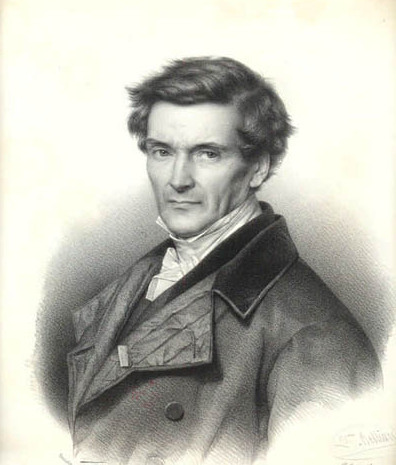
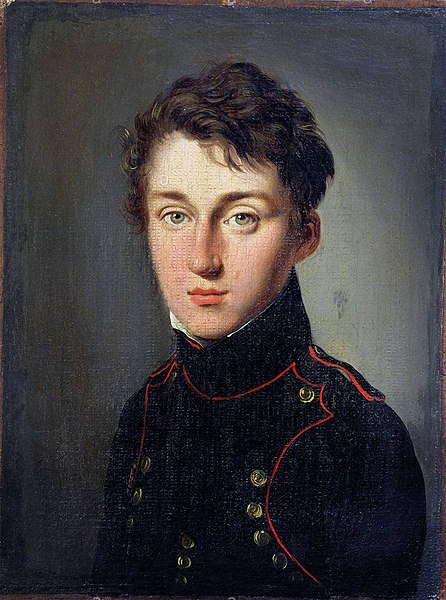
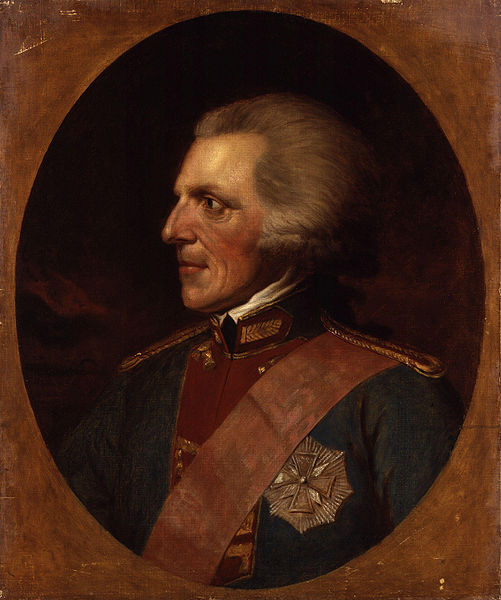

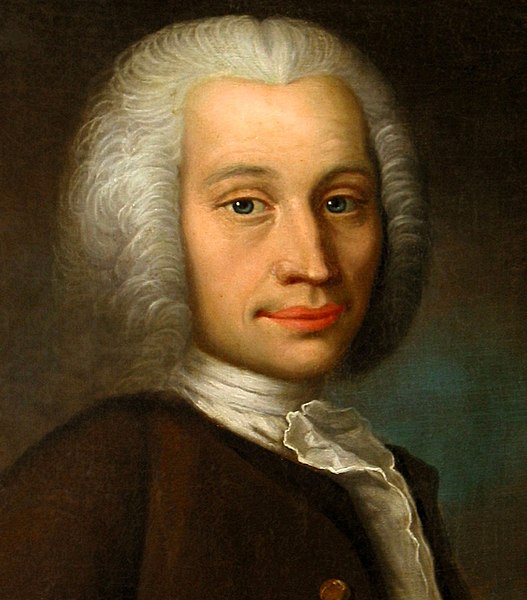
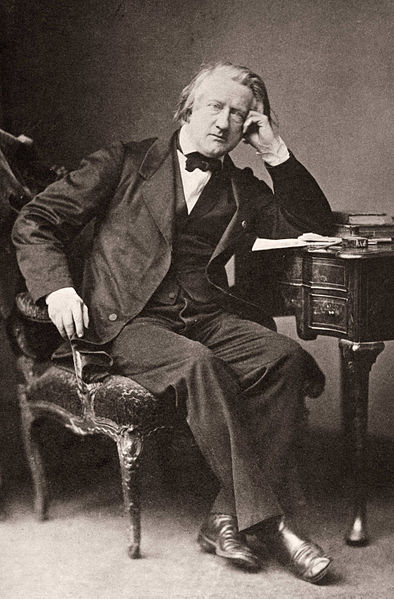
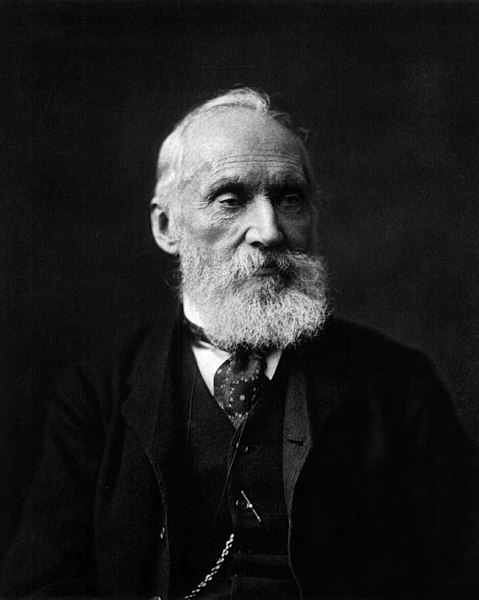
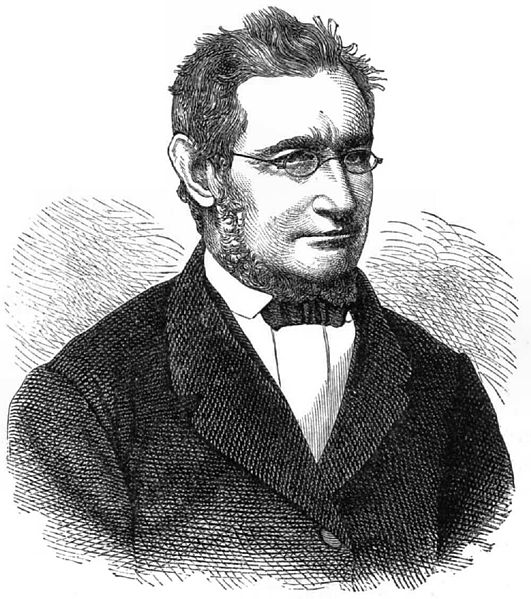
728x600.png)